

Key Takeaways
- Kalshi’s World Cup winner market generated nearly $1.9 billion in trading volume, more than three times its previous record.
- Polymarket’s winner market reached $4.3 billion, while prediction markets made up 27% of all regulated U.S. sports betting during the tournament.
- FIFA is considering expanding the World Cup from 48 to 64 teams in 2030, which could create even more betting activity.
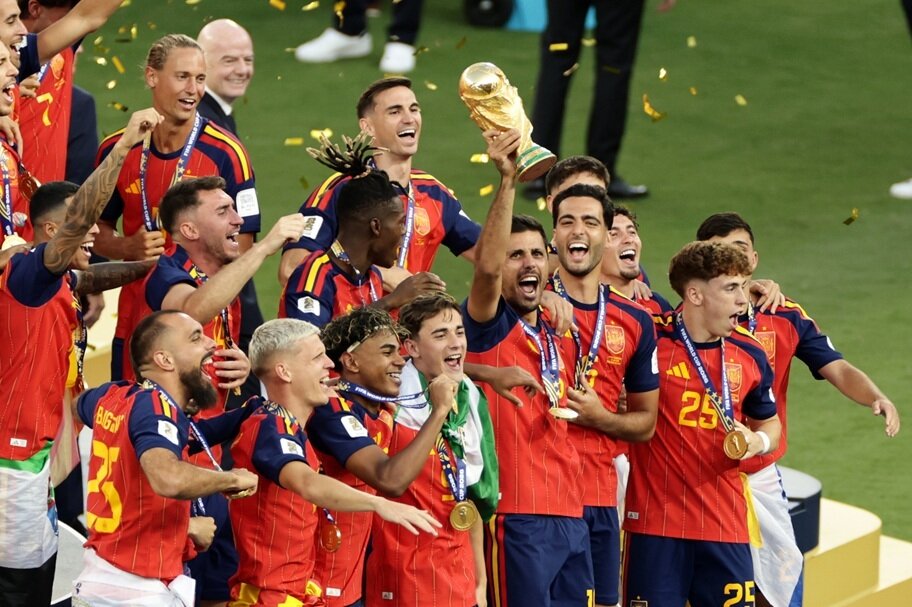
Spain won the 2026 FIFA World Cup on July 19 thanks to Ferran Torres’ extra-time goal. The victory also ended the biggest prediction market event ever.
More than $6 billion was traded across major prediction market platforms during the tournament, showing how quickly this form of sports wagering is growing in popularity.
Record-Breaking Numbers Across Every Platform
The 2026 World Cup set new records for prediction markets. Kalshi reported nearly $1.9 billion in trading on its tournament winner market alone. That easily beat the platform’s previous record of $535 million, which came during the 2024 U.S. presidential election.
Kalshi also added three million new users during the tournament. Sixty-two World Cup markets handled more than $50 million each, and the tournament now accounts for 97 of the 200 biggest markets in company history.
Macquarie Group gaming analyst Chad Beynon said the results were stronger than anyone expected.
Polymarket Captures Global Interest, Prediction Markets Gain Ground in U.S. Sports Betting
Polymarket, which serves a larger international audience, generated $4.3 billion in trading on its World Cup winner market.
Spain entered the tournament as the favorite, but bettors still spread their money across the field. While the six biggest favorites attracted hundreds of millions of dollars in trading, the other 42 teams combined drew more than $3 billion, showing that fans were willing to back long-shot nations.
One of Polymarket’s most popular markets had nothing to do with the championship. Nearly $89 million was traded on whether Cristiano Ronaldo would cry during the tournament. He did, proving that prediction markets now cover many pop culture moments alongside the games themselves.
The World Cup also changed the U.S. betting industry. According to H2 Gambling Capital, prediction markets accounted for 27% of all regulated U.S. sports betting volume during the tournament. At the start of 2026, that figure was only about 9%.
The growth gives prediction market platforms a much larger role alongside traditional sportsbooks, especially in major betting states like New Jersey, New York, Illinois, and Pennsylvania. Since regulated sports betting expanded in 2018, sportsbooks have dominated the market, but prediction platforms are becoming serious competitors during major events.
The Expanded Field Helped Drive Growth
The 2026 tournament featured 48 teams instead of 32, creating 104 matches and many more betting opportunities.
The larger tournament also introduced new fan bases and underdog stories. Countries like Cape Verde reached the knockout stage, while Scotland brought tens of thousands of supporters to Boston.
With more teams involved, fans from around the world had more reasons to place bets throughout the tournament, keeping trading volume high from the group stage through the final.
What’s Next: Even More Markets?
FIFA President Gianni Infantino has said the organization will consider expanding the World Cup to 64 teams for the 2030 tournament.
If a 48-team World Cup generated more than $6 billion in prediction market trading, an even larger event could push those numbers even higher.
The 2026 World Cup showed that prediction markets have become a major part of sports wagering. As the industry continues to grow, future global events could attract even more bettors, trading activity, and attention from regulators.




You must be logged in to comment. Don't have an account? Sign up today.