
Key Takeaways
- FIFA reported no suspicious betting during the 2026 World Cup, but an independent group issued seven betting alerts one day later.
- A Polymarket market involving Folarin Balogun’s suspension drew special attention because it opened before FIFA confirmed his status.
- The Group of Copenhagen estimates bettors wagered around $240 billion on the tournament, about twice the total from the 2022 World Cup.
An independent sports integrity group challenged FIFA’s claim that the 2026 World Cup had no suspicious betting activity. The Group of Copenhagen issued seven betting alerts, including one involving Polymarket and US striker Folarin Balogun.
The disagreement has raised new questions about betting oversight during the tournament.
FIFA Says Clean, Independent Body Says Otherwise
FIFA announced that it found no evidence of match manipulation or suspicious betting across all 104 World Cup matches.
Less than 24 hours later, the Group of Copenhagen released different findings.
The organization said it issued seven “yellow notices,” which are used when several signs suggest betting activity deserves closer review. These signs can include unusual betting patterns, rumors, or information from trusted sources.
The group also placed 15 matches under extra monitoring and reviewed 12 controversial moments during the tournament. While the notices do not prove wrongdoing, they show the independent group believed many situations required further investigation.
The Balogun Market That Raised Red Flags, Other Flagged Incidents and the Scale of the Problem
The biggest concern involved Polymarket.
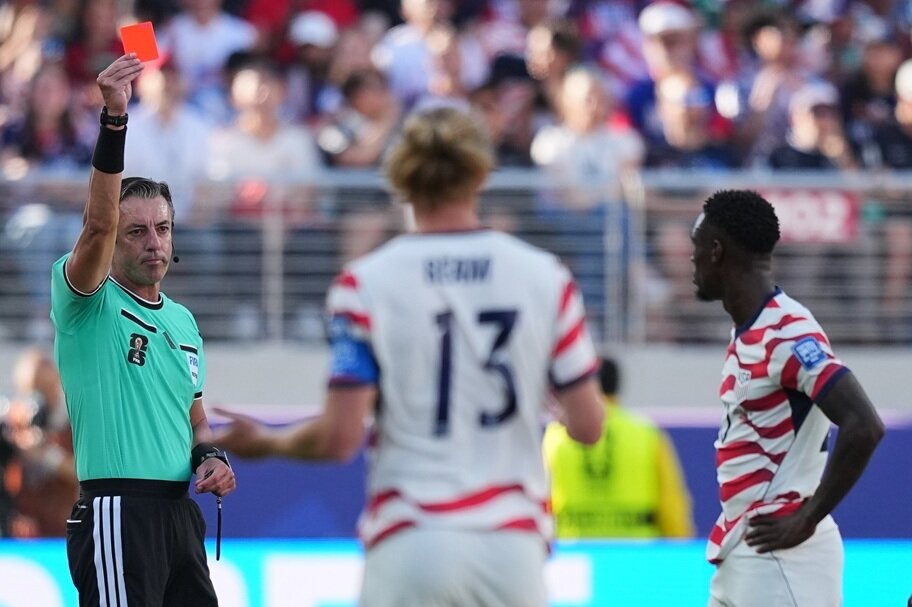
According to the report, Polymarket opened a market on July 2 asking whether US forward Folarin Balogun would play against Belgium. Earlier that day, Balogun had been sent off with a red card against Bosnia and Herzegovina.
FIFA did not officially announce until July 5 that Balogun’s suspension had been lifted, making him eligible to play.
The Group of Copenhagen noted that none of the other 14 players sent off during the tournament had similar prediction markets created for them. The organization has asked FIFA to explain why the Balogun situation was different.
The report also highlighted many other unusual events.
These included a late red card shown to South Africa’s Themba Zwane in the tournament opener, and a lengthy VAR review that overturned a Spain goal. There was also about $4.8 million wagered on Polymarket markets predicting Spain would fail to beat Cape Verde in a match that finished 0-0.
The Group of Copenhagen estimates that around $240 billion was bet on the World Cup.
However, gambling expert Christian Kalb said unusual betting patterns do not automatically mean match-fixing. In some cases, sportsbooks may place hedge bets on prediction markets, creating activity that appears suspicious, but has a legitimate explanation.
Prediction Markets Take Center Stage
For the first time, the Group of Copenhagen monitored prediction markets such as Polymarket and Kalshi during a World Cup.
These platforms operate under different rules depending on the country or US state, making them harder to monitor than traditional sportsbooks.
Kalb said sportsbooks may use prediction markets to reduce financial risk, which can create betting patterns that integrity monitors need to examine carefully.
Gaming analyst Chad Beynon added that prediction market activity during the tournament exceeded industry expectations.
What’s Next
The Group of Copenhagen has asked FIFA to provide a written explanation about the Balogun-related betting market.
So far, only a summary of the group’s report has been released, meaning more details could emerge when the full report becomes public.
The disagreement between FIFA and an organization that worked alongside it during the tournament has raised new questions about transparency in sports integrity monitoring. As prediction markets continue to grow, many industry observers expect increased calls for clearer regulations and stronger oversight.



You must be logged in to comment. Don't have an account? Sign up today.