

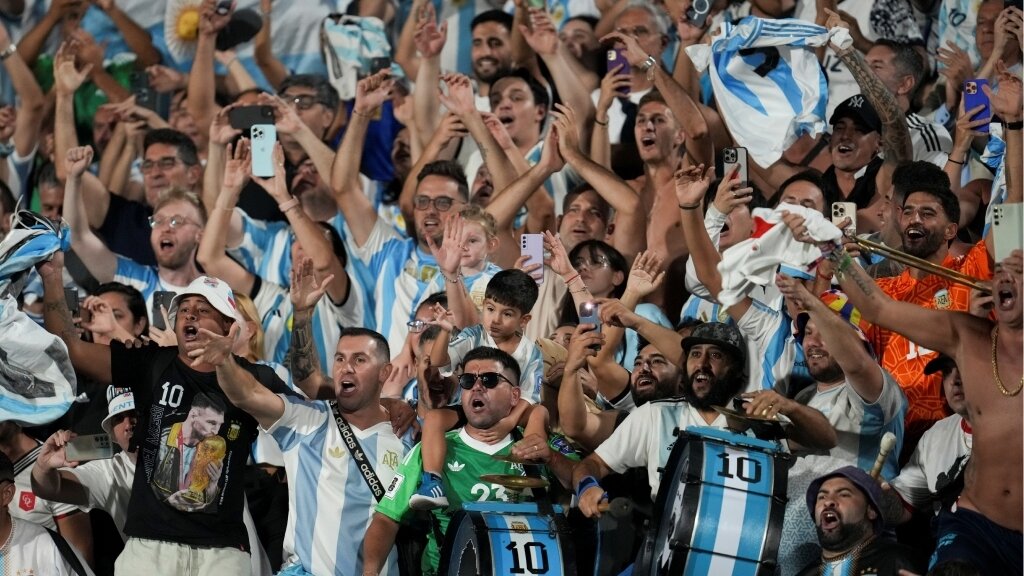
The 2026 World Cup will bring soccer fans from all over the globe to North America this summer. They all have different cultures and watch habits, so finding common ground is essential if you want to have fun with everyone.
The Sports Geek’s World Cup fandom guide is here to help! We explore specific soccer traditions and fandom traits for all countries and add some practical tips like good conversation starters and topics to avoid.
The goal is to help you seamlessly interact with foreign fans that will visit for the World Cup! With that in mind, just click on any country on the list below to see what you can expect.
Disclaimer
We’re not looking to stereotype entire nations, but rather provide an overview of how soccer is perceived and experienced in different cultures. The goal is to help you have fun when meeting fans from other countries during the tournament.
1. Algeria – Les Fennecs (The Fennec Foxes)
⚽ Fandom traits ⚽
- The national team is seen as a symbol of unity and resilience. Major matches often feel bigger than sports events and can unite all Algerians in and outside the country.
- Because many Algerians live in France and elsewhere in Europe, Algeria often has strong support outside of the country.
- Algerian fans traditionally admire skillful, creative players and flair on the ball. Legends like Rabah Madjer and modern stars like Riyad Mahrez are especially valued for elegance and creativity.
- Victories are celebrated massively in streets and public squares, while losses can provoke strong criticism, debate, and emotional reactions.
📺 Watch habits 📺
- Many fans prefer watching matches with family, friends, or large café crowds rather than alone. Big national-team games often turn cafés and public spaces into communal viewing events.
- Soccer cafés are central to fandom, especially for men and younger supporters. Fans gather hours before kickoff to discuss lineups and tactics.
- Important wins often lead to car parades, flags, fireworks, chanting, and crowds in city centers late into the night.
📢 Atmosphere and chants at the stadium 📢
- Algerian supporters are known for nonstop singing, drumming, whistling, and coordinated chants. Stadiums can become deafening during important matches.
- In France and elsewhere in Europe, Algerian fans often create home-like atmosphere abroad. Celebrations after big wins can fill entire city centers.
- Popular chants:
- “One, Two, Three, Viva l’Algerie!”
- “La Casa del Mouradia”
- “Dzayer!” (“Algeria!” in dialect)
- “Tahya El Djazaïr!” (“Long live Algeria!”)
- “Fennecs! Fennecs!” (referring to the national team nickname)
🔥 Rivalry context 🔥
- Morocco are Algeria’s biggest rivals, as they’re neighboring countries with historic political tensions.
- Egypt is also a big rivalry, especially after Algeria beat Egypt 1-0 in a playoff to qualify for the 2010 World Cup.
- Tunisia is another rival, although not as much as Morocco and Egypt. Matches are usually competitive between the two countries.
⭐ Signature moment ⭐
- Algeria made it out of the group stage and to the round of 16 for the first time ever in 2014, and they took the eventual champions from Germany to extra time, losing 2-1.
🗣️ Conversation starters 🗣️
- Ask fans about the team that won the 2019 Africa Cup of Nations.
- Ask which players could be the next Riyad Mahrez, who is still captaining the squad at 35 years old.
🥅 Matchday tips 🥅
- Bring energy, as Algerian fans usually watch matches very passionately. Loud reactions, cheering, singing, and emotional commentary are normal and encouraged.
- Learn a few simple chants if you want to connect with the crowd.
- Expect emotional swings, as Algerian supporters can go from euphoric to furious within minutes depending on the match. Don’t mistake intensity for hostility, but soccer is taken very seriously.
❌ What to avoid ❌
- Matches against Morocco, Egypt, or Cameroon can bring strong opinions. It’s usually best to avoid provocative jokes unless you know the group well.
- Fans may debate players intensely themselves, but outsiders harshly attacking stars like Riyad Mahrez can trigger defensive reactions.
- Generalizations about politics, religion, or culture can quickly sour the mood.
2. Argentina – La Albiceleste (The White and Sky Blue)
⚽ Fandom traits ⚽
- Intense emotions mix with deep tactical understanding of the game. Argentinian fans are among the most educated and most demanding in the world.
- Soccer is a source of national pride and even part of the country’s identity. It starts from the streets and sometimes ends up at the top European leagues.
- Fans value both grit and creativity, expecting hard work and team spirit even from the most talented players.
📺 Watch habits 📺
- Large group watch parties with constant singing are common during games, with everyone wearing the white and blue shirt.
- Argentine fans often engage in heavy pre-match discussion about tactics and lineups with friends, family, co-workers, and even random people on public transport.
- Parties after the games are a given, especially after big victories.
📢 Atmosphere and chants at the stadium 📢
- Maradona and Messi are always honored with chants, regardless of the opposition, the score, or anything else.
- Passionate support from the first to the last minute, even when things are not going well. Standing behind your team is a matter of national pride.
- Any good play is recognized and celebrated instantly to create extra momentum, from smart flicks in the middle of the park to gut-busting sprints that stop the opposition.
- You will see a wave of blue and white shirts at every game, with many Maradona and Messi shirts, replicas of the World Cup trophy, cosplay, and so much more.
- Popular chants:
- Vamos, Vamos Argentina
- Muchachos, Ahora Nos Volvimos a Ilusionar (Guys, we have hope once again)
- Soy Argentino, Es Un Sentimiento (I’m Argentine, it is a feeling)
🔥 Rivalry context 🔥
- Brazil is the big local rival, especially during Copa America.
- Fate has decided that Germany is Argentina’s big rival at World Cups, with the two sides meeting in three finals in the past.
⭐ Signature moment ⭐
- Winning the 2022 World Cup healed old wounds and cemented Messi’s legacy as the GOAT, at least, outside Argentina.
🗣️ Conversation starters 🗣️
- Ask them what World Cup title they value the most.
- Ask who they think is the next breakout Argentina star that could replace Messi as the nation’s leader in big tournaments.
🥅 Matchday tips 🥅
- Lean into the energy and react with the crowd during big chances. Even if you don’t know soccer well, Argentine fans do, so follow their lead.
- Respect emotional swings and don’t try to engage when fans are focused on the game.
❌ What to avoid ❌
- Don’t start a Maradona vs. Messi debate, nothing good can come out of it.
- Don’t you dare suggest soccer is “just a sport”.
Sources
- https://vamospanish.com/discover/the-heartbeat-of-argentina-footballs-cultural-impact/
- https://www.reddit.com/r/argentina/comments/7n8j68/what_is_special_about_argentinian_football_fan/
- https://revista.drclas.harvard.edu/the-world-cup-the-importance-of-argentinas-victory-and-studying-abroad/
- https://www.tangol.com/blog/eng/why-you-should-watch-a-futbol-game-in-argentina_post_471
3. Australia – The Socceroos
⚽ Fandom traits ⚽
- Australian soccer culture has been heavily shaped by immigrant communities that brought the game to the country, founded some of the first clubs, and essentially started soccer fandom.
- The Socceroos unite casual and hardcore fans alike, with the entire nation strongly embracing the “punching above our weight” underdog identity.
- Domestic soccer has developed active supporter groups with chants, tifos, and flares, which has translated into a more organized support for the national team as well.
📺 Watch habits 📺
- Fans commonly gather in pubs, sports bars, and fan zones to watch games together, share a drink, and have fun. Soccer is a social experience, especially when the Socceroos are playing.
- Since the country is in an awkward time zone, fans often organize their sleep schedules around major tournaments. Australian nights during World Cups, especially played in Europe, are almost as busy as regular days.
- During the World Cup, even people who rarely watch soccer become heavily engaged, creating massive temporary national interest.
📢 Atmosphere and chants at the stadium 📢
- Australian fans love chanting, banter, sarcasm, and self-aware humor. Even intense matches can include joking and friendly trash talk.
- Since the rise of the A-League, you can see large groups of organized supporters providing a show whenever Australia is playing.
- Popular chants:
- “Aussie Aussie Aussie, Oi Oi Oi!”
- “Come On Aussie”
🔥 Rivalry context 🔥
- New Zealand are their biggest rivals, due to location and a long history of competition. It is sometimes called the “Soccer Ashes” rivalry, which is based on the cricket rivalry between Australia and England.
- Japan are other rivals as the two are usually the strongest teams in the Asian Football Confederation (AFC).
⭐ Signature moment ⭐
- John Aloisi’s shirtless sprint after scoring the winning penalty vs. Urugay on the road to the 2006 World Cup is a defining image of Australian soccer.
🗣️ Conversation starters 🗣️
- Ask them who’s the Australian soccer GOAT.
- Ask them who’s the next Australian prospect that can make in the English Premier League.
🥅 Matchday tips 🥅
- Even casually participating helps a lot. The easiest one: “Aussie! Aussie! Aussie!”
“Oi! Oi! Oi!”
- Join the banter, as Australians often joke constantly during games. Friendly teasing, sarcasm, and self-deprecating humor are common – don’t take it too seriously.
- Respect the underdog mentality, as many Australian fans see their teams as battlers competing against soccer giants. Praising effort, grit, and determination usually goes over well.
❌ What to avoid ❌
- Don’t take banter too seriously, as it’s not meant to insult you or your team. It’s just casual fun.
- Avoid acting like soccer is “too serious”, as many Australian fans are passionate about their team but also like to have fun.
4. Austria – Das Team
⚽ Fandom traits ⚽
- Soccer is the most popular sport in the country, the only one that is above alpine skiing in a country that’s deeply devoted to winter sports.
- Complete unity when the national team plays, with all club bias left behind. The supporters always act as one for Das Team.
- Fans expect disciplined, tactically sound and hard-working performances, even from the most talented players.
- Moderate expectations that tend to grow after big performances.
📺 Watch habits 📺
- Disciplined and consistent support, sometimes resembling an organized group rather than just soccer fans.
- The entire nation is watching when there’s a big tournament, usually in fan zones all across Austria.
- The results often dictate the mood in the country for days, sometimes weeks.
📢 Atmosphere and chants at the stadium 📢
- Consistent chanting, with a strong focus on team chants, with some player chants mixed in.
- Honest running and hard work are valued higher than flashy but inefficient plays.
- The crowd is galvanized when the team is pressing high with intensity.
- Popular chants include:
- Immer wieder Österreich! (Austria forever!)
- Ich bin aus Österreich (I’m from Austria)
🔥 Rivalry context 🔥
- Germany is Austria’s biggest rival on the international stage.
- Any match against a powerhouse from Europe or South America generates a lot of energy and expectations to at least give them a fight.
⭐ Signature moment ⭐
- Winning the bronze at the 1954 World Cup remains Austria’s greatest achievement.
🗣️ Conversation starters 🗣️
- Asked them who should Ragnick rely on at the heart of the defense with so many key players there injured.
- Ask them who should replace Arnautovic as the main striker in the long term.
🥅 Matchday tips 🥅
- Focus discussions on matchday on tactics and starting lineup. Make sure you’re prepared.
- Ask them how they feel about returning to the World Cup after such a long absence, and what the expectations are.
❌ What to avoid ❌
- Don’t compare Austria to more successful European soccer countries, especially Germany.
- Don’t try to talk to Austrian fans when they’re chanting.

5. Belgium – The Red Devils
⚽ Fandom traits ⚽
- Belgians prefer a dynamic, possession-based, and highly technical style of attacking soccer.
- The entire nation is obsessed with soccer during big tournaments.
- Golden Generation grief and gratitude can live in the same sentence when discussing the Red Devils, as they are both the most successful generation and the biggest what-if in the country’s history.
📺 Watch habits 📺
- Large watch parties take place at the biggest pubs and fan zones in Belgium every time the team is playing.
- The more passionate fans often engage in debates around lineups and tactics before, during, and after games.
- You can see the iconic red jerseys all across Belgium when there’s a game: in schools, public transport, on the streets, and pretty much anywhere you can think of.
📢 Atmosphere and chants at the stadium 📢
- Expect language-switching chants between French and Dutch verses.
- The club supporter groups bring tifo banners, choreography, and other forms of organized support to the stadium
- Lots of devil’s horns in the crowd, as Belgium’s known as the Red Devils.
- Popular chants:
- “Waar Is Dat Feestje?” (Dutch for “Where is the party?”)
- “Allez, allez, allez, allez, les Rouges! Allez les Rouges! (Go, go, go, go, the Reds. Go the Reds!).
🔥 Rivalry context 🔥
- Known as the “Derby of the Low Countries,” matches between Belgium and the Netherlands have been taking place since 1905, making the Dutch their biggest rivals.
- Another local rival is France, with the last big meeting a 2018 World Cup Semifinal match that end up with a heartbreak for Belgium’s Golden Generation.
⭐ Signature moment ⭐
- Third place at the 2018 World Cup is seen as the Golden Generation’s biggest success, even if some believe they could’ve gone further.
🗣️ Conversation starters 🗣️
- Ask fans if they believe the Golden Generation met the expectations.
- Ask which promising youngsters could be part of the next big wave of Belgium soccer stars. Key contenders are Amadou Onana and Jeremy Doku.
🥅 Matchday tips 🥅
- Get ready to share a local Jupiler beer with them either at the stadium bar or in the stands. This is common among Red Devils’ supporters.
- There’s probably a chant for you with game chants ranging from Dutch, to French and even English. Learn “Everywhere We Go”, a standard global soccer chant regularly remixed for the Red Devils.
❌ What to avoid ❌
- Don’t imply that American beer is on the same level as Belgian beer. That’s considered blasphemy.
- Don’t treat the Golden Generation as failures despite not winning a big trophy.
Sources:
- https://www.euruni.edu/blog/belgium-from-footballing-minnow-to-powerhouse/
- https://www.vrt.be/vrtnws/en/2018/07/13/red-devils-to-get-a-special-welcome-in-brussels-this-sunday/
- https://medium.com/@iasbyfatima/the-thrilling-netherlands-belgium-rivalry-in-nations-league-324945771243
- https://www.topendsports.com/events/worldcupsoccer/countries/belgium.htm
6. Bosnia and Herzegovina – The Dragons
⚽ Fandom traits ⚽
- Completely obsessed with soccer around big tournaments, it’s the major topic of conversation in every aspect of life.
- Enjoying the experience with optimism and pride, even when the results are not what they hoped for.
- Embracing the underdog role, which unites the nation and makes them a fierce opponent for everyone, both on the pitch and in the stands.
📺 Watch habits 📺
- Everyone has an opinion on tactics and starting lineups, but they are all the same in one thing: unquestionable support to the team.
- The entire country is watching, many on large TV screens in parks, public places, open bars, and anywhere else you can think of.
- Distractions during games are not tolerated; the entire focus is on the events on the pitch.
📢 Atmosphere and chants at the stadium 📢
- Pulsating atmosphere that rewards tackles and hustle plays almost as loudly as goals.
- Complete ecstasy when a goal is scored.
- Full engagement during the game, nothing off the pitch matters.
- Popular chants:
- Jedna si jedina (You are the only one)
- Ko ne skače, mrzi Bosnu! (He who doesn’t jump hates Bosnia)
- Bosno, majko, volimo te! (Mother Bosnia, we love you!)
🔥 Rivalry context 🔥
- Any other Balkan country is considered a local rival.
- Every game against a big favorite brings out the best of the fans, who are committed to strong support from start to finish.
⭐ Signature moment ⭐
- Beating Italy on penalties to qualify for the 2026 World Cup.
🗣️ Conversation starters 🗣️
- Ask them which players from the domestic league deserve a move to the top European soccer leagues.
- Ask them who is Edin Dzeko’s heir for the future.
🥅 Matchday tips 🥅
- Stay sincere about underdog narratives without sounding condescending.
- Observe for individual duels on the pitch and bring up their importance for the end result.
❌ What to avoid ❌
- Don’t underestimate their belief in the national team’s chances to upset the odds.
- Don’t expect them to be conversational during games.
- Don’t talk about religion.

7. Brazil – Seleção
⚽ Fandom traits ⚽
- Many Brazilians grow up surrounded by soccer playing in streets or beaches, following clubs with family, watching matches constantly, and listening about the legends of the past and the stars of the present.
- No other country loves flair and creativity more than Brazil, with dribbling and improvisation on the pitch regarded as high art instead of a sport. This is where the term “jogo bonito” (“the beautiful game”) comes from.
- Brazil’s five World Cups made soccer central to national pride. The Seleção is viewed as a symbol of Brazil’s global image and cultural greatness.
📺 Watch habits 📺
- Brazilians commonly watch matches with family and friends, with big games often becoming neighborhood gatherings or parties.
- You can expect to see people watching in bars, restaurants, beaches, public squares, and everywhere around Brazil. EVERYONE is watching when Seleção is on the pitch.
- The country is completely obsessed during World Cup games, as businesses close early, schools pause activities, and the whole country often focuses on the match.
📢 Atmosphere and chants at the stadium 📢
- Brazilian supporters create rhythmic atmosphere with samba drums, coordinated chants, clapping, singing, and dancing. Stadiums often feel more like festivals than sporting events.
- Matchdays resemble street celebrations of national holidays with flags everywhere, golden jerseys, replicas of the World Cup, and fireworks.
- Brazilian fans are among the most educated, so they are highly sensitive to everything on the pitch. For many of them, soccer comes just after they start walking, so they know the game.
- Chants are often built around samba percussion, carnival rhythms, and coordinated drumming.
- Popular chants:
- “Eu Sou Brasileiro” (I’m a Brazilian)
- “Mil gols, mil gols!” (“A thousand goals!”) – dedicated to Pele
🔥 Rivalry context 🔥
- Brazil vs. Argentina, Pele vs. Maradona/Messi, probably the biggest rivalry in soccer.
- Germany and Italy, as they are often Brazil’s main challengers for World Cup greatness.
⭐ Signature moment ⭐
- Pick one of Brazil’s World Cup-leading five wins in 1958, 1962, 1970, 1994, and 2002.
🗣️ Conversation starters 🗣️
- Ask them which World Cup title they value the most.
- Ask them who is going to replace Neymar as the team’s leader after this World Cup.
🥅 Matchday tips 🥅
- Be ready for nonstop noise during the game if you’re close to the Brazilian fans.
- Dress in gold and be ready to dance some salsa!
- Show your appreciation for flair plays.
- Don’t expect a lot of conversations during the game, as Brazilians are focused on the action.
❌ What to avoid ❌
- Don’t tease them that Brazil hasn’t won a World Cup since 2002.
- Never talk about the 7-1 loss to Germany at the 2014 World Cup at home in Brazil.
- Never say Argentina is better than Brazil, or that Diego Maradona is better than Pele, even as banter.

8. Canada – Les Rouges (The Reds)
⚽ Fandom traits ⚽
- For years, Canada wasn’t viewed as a serious soccer nation, especially on the men’s side. Fans often developed a resilient, long-suffering identity by celebrating small milestones, joking about heartbreak, and taking pride in gradual progress.
- Canadian soccer fandom isn’t centralized the way hockey culture often is. Different regions bring different vibes like the strong multicultural supporter culture in Toronto, Montreal’s more European/South American style support and ultras influence, the growing grassroots pride of the Prairie provinces.
- Fans often identify with both their local club culture and the national team.
- Producing young talent is considered the greatest achievement for Canadians, with Alphonso Davies the brightest example
📺 Watch habits 📺
- Fans will head to local pubs to watch the games or have watch parties at their house.
- There will also be specific events in each city where there are games, especially when Canada is playing, but you’ll also find events for other teams.
- Many people will watch or follow via social media, as digital presence is big in Canada around major tournaments.
📢 Atmosphere and chants at the stadium 📢
- For maybe the first time in the country’s soccer history, the national team will play in front of large crowds of Canadians.
- With many supporter groups in the country, you can expect choreographies, banners, and so much more.
- Popular chants:
- “Allez Allez Allez”, “Ole Ole Ole”
- “I Believe That We Will Win”
- “Canada, Canada” (usually aided by drums and claps)
🔥 Rivalry context 🔥
- The United States are Canada’s biggest rivals in every sport, especially since Canada has improved at soccer, but 2026 takes on extra significance after the US beat Canada in Olympic hockey, both men and women.
- Mexico is another rival for Canada, although not as heated as the Americans.
⭐ Signature moment ⭐
- Scoring twice against Belgium’s Golden Generation in the 2022 World Cup, capturing many neutral fans in the process.
🗣️ Conversation starters 🗣️
- Ask about the status of Alphonso Davies, Canada’s best player, or Jonathan David. Don’t forget about Christine Sinclair.
- Talk about Canada’s chances to get out of the group stage for the first time ever.
🥅 Matchday tips 🥅
- Wear red to support the Canadian team, although Canadians won’t take it to heart if you wear the jersey of your team, as long as you’re respectful.
- Remember that North Americans already have a “football”. It’s called soccer on this side of the pond, or at least in Canada and the United States.
❌ What to avoid ❌
- Don’t assume Canadians don’t know anything about soccer.
- Avoid political talk, especially between Canada and the United States (and Mexico to a lesser extent).

9. Cabo Verde – The Blue Sharks
⚽ Fandom traits ⚽
- Soccer is not only the most popular sport in Cabo Verde, but also a way to forget about daily life and experience pure joy.
- Every achievement of the national team brings great pride and optimism in the country.
- In Cabo Verde, soccer is mostly about experiencing emotions, tactics are not that important.
📺 Watch habits 📺
- Carnival-like atmosphere completely overtakes Cabo Verde when the national team is playing.
- Soccer matches are considered social events, so most people watch with friends and family or join bigger groups in cafes and viewing zones.
- The entire country simply stops functioning for a day or two when the national team achieves meaningful wins.
📢 Atmosphere and chants at the stadium 📢
- You can expect all sorts of musical instruments that blend African, Portuguese, and Caribbean culture.
- Chanting is not as frequent as singing and dancing in the stands.
- The crowd looks like a blue wave in the stadium, and in the streets at home, if the result is right.
- Popular chants:
- Força Tubarões Azuis! (Go Blue Sharks!)
- Kabu Verdi, Kabu Verdi
- Official World Cup anthem – “Nôs Óra dja Txiga” (Our Time Has Arrived)
🔥 Rivalry context 🔥
- No true rivals, but no friends on the pitch either.
⭐ Signature moment ⭐
- Qualifying for the 2026 World Cup is the country’s greatest achievement (so far!).
🗣️ Conversation starters 🗣️
- Ask which young player might make the jump to the Portuguese league next.
- Ask how Creole soccer songs differ from continental Portuguese chants.
🥅 Matchday tips 🥅
- Learn to dance funaná!
- Follow the mood of the crowd, enjoy the experience, and wear blue if you want to blend in.
❌ What to avoid ❌
- Don’t focus too much on tactics, this is not what soccer is about in Cabo Verde.
- Don’t assume that Cabo Verde fans don’t care about the sport, just because they experience it more like a festival than a sport.
Sources
- https://www.theguardian.com/football/2025/oct/14/cape-verde-celebrate-historic-2026-world-cup-qualification
- https://africasacountry.com/2013/01/afcon-playlist-no-1-cabo-verde-songs-for-the-blue-sharks
- https://www.goal.com/en/lists/a-small-country-with-a-big-heart-inside-cape-verde-s-improbable-journey-to-world-cup-qualification/bltf5796b98e4271d49
10. Colombia – Los Cafeteros (The Coffee Growers)
⚽ Fandom traits ⚽
- The Colombian national team is a huge source of unity and pride. Major tournaments often bring the entire country together.
- Fans favor a tactical, highly pragmatic style of play that focuses on resilient defense, deep defensive blocks, and counter-attacks.
- Colombian fan culture is very rhythmic and festive, mixing soccer with traditional music and dancing.
📺 Watch habits 📺
- Most Colombians prefer watching soccer matches in large groups with their family, friends, neighbors, coworkers, and even strangers for big tournaments.
- Heavy bar and public-viewing culture, as restaurants, bars, plazas, and shopping centers often set up giant screens for Colombia matches.
- Music is an integral part of the experience, with the likes of salsa, reggaeton, and other traditional dances taking place all over Colombia.
- Important wins often lead to car caravans, flags out windows, and fireworks.
📢 Atmosphere and chants at the stadium 📢
- Many Colombian fans are very superstitious, so they wear lucky jerseys, avoid certain actions, enter the stadium with a specific foot, and engage in other good luck rituals.
- The support on the stands is extremely passionate, rewarding every display of effort and elegance with equal level of appreciation.
- Popular chants
- “¡Colombia! ¡Colombia!”
- “Vamos, Vamos Colombia”
- “Soy Colombiano” (“I am Colombian …”)
🔥 Rivalry context 🔥
- Venezuela are Colombia’s biggest rivals as they’re neighboring countries, so beating them twice on the road to the 2026 World Cup was quite satisfying.
- Argentina and Colombia have had many heated games, recently in the 2024 Copa America final (Argentina won 1-0) and during a World Cup qualifier in June 2025.
⭐ Signature moment ⭐
- The 2014 World Cup run and the James Rodriguez goal that mesmerized the world.
🗣️ Conversation starters 🗣️
- Ask them who’s the best Colombian player ever.
- Ask them how Jhon Duran can save his career and fulfill his potential.
🥅 Matchday tips 🥅
- Wear yellow to show your support and blend in.
- Be ready for music and dancing, as only the biggest heartbreaks can stop Colombians from partying hard.
- Learn a few simple chants like “Vamos Colombia!”
❌ What to avoid ❌
- Avoid dismissing soccer as “just a game”, as it’s a source of national pride and family memories, and even part of the culture and identity of many Colombians.
- Avoid insensitive comments about violence in Colombian soccer, specifically, the 1994 tragedy.
- Casual jokes about crime, drugs, or old stereotypes are especially inappropriate in a soccer environment tied closely to national pride.
Sources
- https://www.theguardian.com/football/2023/aug/11/every-moment-an-explosion-of-joy-colombian-fans-drive-their-teams-world-cup-quest-with-unbridled-passion
- https://www.theguardian.com/football/2023/aug/11/every-moment-an-explosion-of-joy-colombian-fans-drive-their-teams-world-cup-quest-with-unbridled-passion
- https://www.fanchants.com/football-songs/colombia-chants/colombia/
11. Croatia – Vatreni (The Fiery Ones)
⚽ Fandom traits ⚽
- Soccer was introduced to Croatia in 1873 by English engineers and expatriates, quickly catching up and becoming one of the most popular sports in the country, currently by far the most popular.
- Soccer played a major role in unifying the country during its fight for independence in the 1990s. The national team is seen as a global ambassador for the country, and major tournaments boost the nation’s patriotism levels.
- The success of Croatia’s Golden Generation in the late 2010s and early 2020s has made the sport more popular than ever, with the entire nation completely obsessed around big tournaments.
📺 Watch habits 📺
- Major games for the national team are an excuse to pack local cafes and town squares, ensuring you’ll never be alone watching a game.
- If you find a local Croatian cafe or “kafic”, odds are you’ll be able to watch the game. It’s typical Croatian culture for every cafe to have a TV set up to watch, and some will take it a step further by setting up large screens in the square for huge viewing parties.
- Like many passionate soccer fans, Croatians give it their all while watching their team, with songs, chants, yelling, whistling, and even crying, even from fans that are not in the stadium.
- Big wins kick off wild parties that become a mix of street parades and music festivals that include people of all ages.
📢 Atmosphere and chants at the stadium 📢
- Croatian soccer features an “Ultras” culture, made famous by various organized groups, such Hajduk Split’s Torcida. These die-hard supporters attend matches, set up flares and pyrotechnics, choreograph huge stadium tifos, and sing for the full 90.
- Croatians favor passion over politeness, and in intense rivalry matches, emotions become intense and chants can become less friendly and more crude.
- Popular chants:
- “Lijepa li si” (“How beautiful you are”)
- “Ajmo, Hrvatska” (Let’s go, Croatia)
- “Hoćemo pobjedu!” (We want a victory!)
- “Vatreni!” (The Fiery Ones!)
🔥 Rivalry context 🔥
- Due to historical ties and the breakup of Yugoslavia, Serbia is Croatia’s biggest and fiercest local rival.
- France beat Croatia in the 1998 World Cup semifinals and the 2018 final, so the entire country longs for revenge.
⭐ Signature moment ⭐
- The 2018 final run remains the country’s biggest achievement, closely followed by two semifinal runs in 1998 and 2022.
🗣️ Conversation starters 🗣️
- Ask them what Croatian team was better: the one from 1998 or the one from 2018/2022.
- Ask them who has the potential to replace Luka Modric as the leader of the national team.
🥅 Matchday tips 🥅
- You’ll fit in instantly with a red and white checkered shirt or jersey, known as the šahovnica or Croatian checkerboard.
- Show your appreciation for the country’s success, despite the small population.
❌ What to avoid ❌
- Do not open with Balkan war discussion. This ten-year conflict from 1991-2001 saw Yugoslavia broken up into six independent nations.
- Don’t expect much attention from Croatian fans during the game, as nothing off the pitch truly matters to them.

12. Curaçao – The Blue Wave
⚽ Fandom traits ⚽
- First introduced to the sport by Dutch sailors and oil industry workers, the nation originally competed as the Netherlands Antilles.
- As part of the Kingdom of the Netherlands, you’ll find Blue Wave fans abroad in the Netherlands and all over Europe as citizens are part of the EU.
- The team brings the entire island together, with the streets of the capital, Willemstad, becoming a sea of blue on match days.
📺 Watch habits 📺
- Local hotels, beach clubs, and bars are packed for every match, with fans lining up to order signature “Blue Wave” cocktails.
- Blue and orange coolers sit side-by-side because families are often mixed between Curaçao and Netherlands loyalties.
- The fans are always positive around big game, enjoying the experience even if the result is negative.
📢 Atmosphere and chants at the stadium 📢
- Get ready to dance to Papiamentu, Dutch and Caribbean rhythms throughout the game.
- Tumba and tambu drums can be heard all over during game days.
- The “Blue Wave” by Jeon is the unofficial anthem of the team and is met by synchronized drumming and dancing.
- Popular chants:
- “Kòrsou, ban pa nos sigui!” (Curaçao, let’s keep going!)
- “Nos selekshon stima bosnan!” (We love our national team!).
🔥 Rivalry context 🔥
- Their biggest and most competitive modern rival is Jamaica whom they often meet in CONCACAF World Cup Qualifying and the Gold Cup. During third round qualifying in 2026, Curaçao knocked Jamaica out of top spot in the group.
- With historical and geopolitical ties, any match against Aruba, known as the Dutch Caribbean Derby, takes on extra importance.
⭐ Signature moment ⭐
- Qualifying for the 2026 World Cup is their first time in the tournament. They also qualify as the smallest nation by population to ever compete.
🗣️ Conversation starters 🗣️
- Brush up on your Eredivisie knowledge as many national players have trained and played in the Dutch top-flight league.
- Ask them about young prospects who have the potential to reach big European leagues.
🥅 Matchday tips 🥅
- Throw on a blue and yellow shirt and refresh your Caribbean music references to join island nation fans in their historic debut at the World Cup.
- Respect the effort even if the team is struggling, as even making it here is an amazing achievement.
❌ What to avoid ❌
- Do not confuse Curaçao with Aruba or Sint Maarten soccer histories.
- Don’t ask why the island focuses more on baseball.
- Don’t mispronounce the name. The correct pronunciation is “Cure-ah-sow (with the last syllable rhyming with “cow”).
Sources:

13. Czechia – Narodak (The National Team)
⚽ Fandom traits ⚽
- Czechia has a rich soccer history as part of Czechoslovakia but also found success after the country was split. The country’s domestic scene is focused on developing talent, which is the reason you see the occasional Czech player at the very top level of European soccer.
- Soccer is in a tight battle with ice hockey for the title of most beloved sport, but it completely takes over during big tournaments.
- Czech fans are somewhat rational compared to other countries, adopting cautious optimism around big tournaments.
- Czech fans expect a little bit of everything: hard work, strong defense, creative midfield, and dangerous attack.
📺 Watch habits 📺
- Beer and soccer go hand in hand, with oceans of beer consumed in the country around every big game.
- You can sense the quiet tension in the entire country before a big game, with the normally calm and rational Czech slowly surrendering to the emotions before kick off.
- You can expect pubs, parks, and public watch zones to be packed during games of the national team, with Czech fans from all ages enjoying the experience together.
📢 Atmosphere and chants at the stadium 📢
- Large ultras groups often lead the way in the stadium, chanting and supporting the national team from start to finish. You can also expect choreography and banners.
- Smart plays are rewarded with applause and cheers, as Czech fans value intelligence on the pitch. This is the country that gave us the Panenka penalty after all.
- Czech fans are gracious in defeat and don’t take it dramatically, but don’t you dare mistake that for lack of passion.
- Popular Chants:
- Kdo neskáče, není Čech (Whoever doesn’t jump isn’t Czech)
- Češi do toho! (Come on, Czechs!)
- Pojďme hoši, pojďme do toho (Come on boys, let’s do it)
🔥 Rivalry context 🔥
- Germany and Poland are the big local rivals, as well as Slovakia after Czechoslovakia split into two countries.
- Older Czech fans still want revenge against Brazil for the lost World Cup Final of 1962 (as Czechoslovakia).
⭐ Signature moment ⭐
- The Golden Generation reaching the EURO 1996 Final.
🗣️ Conversation starters 🗣️
- Ask them what young players have the potential to move from the Czech league to the biggest European leagues.
- Ask them who’s going to bring goals at the World Cup.
🥅 Matchday tips 🥅
- Be prepared to share a beer with Czech fans, as this is their national drink and the best way to get under their skin.
- Learn more about the team, as Czech fans often discuss tactics and lineups before and during games.
❌ What to avoid ❌
- Don’t pretend you know more about soccer than you do, Czech fans will quickly find out.
- Don’t suggest Czechia shouldn’t be proud with Czechoslovakia’s success.
14. DR Congo – The Leopards
⚽ Fandom traits ⚽
- Soccer is not only a beloved sport in DR Congo, it also provides opportunities to express yourself creatively as fans dance, dress in unusual clothes, and show their personality in many other ways.
- The sport is also a great way to escape reality for a while and enjoy the experience with friends, family, and other people around you.
- The return to the World Cup for the first time in over 50 years is one of the biggest events in the country in 2026, bringing hope and optimism for the future.
📺 Watch habits 📺
- Watching soccer is a social experience, with people gathering in their homes, community centers, bars, and other public spaces where you can enjoy the games with others.
- The entire country transforms into a carnival during games, while DR Congo fans living in other countries bring some of their energy to different parts of the world.
- People care about the results, but the shared experience and the positive emotions it brings are the main reasons why everyone is watching when the Leopards play.
📢 Atmosphere and chants at the stadium 📢
- Don’t be shocked to see DR Congo supporters standing still as statues during matches, like Lumumba, the super fan who became viral during AFCON 2025.
- Expect lots of music and traditional dances from DR Congo fans, creating an atmosphere that’s more common at festivals than soccer matches.
- Fans are especially fond of the unintended comedic moments that soccer inevitably creates, so expect a lot of laugher on the stands.
- Popular chants:
- Fimbo na Fimbo (Blow for Blow)
- Congo na biso, tokolinga yo seko! (Our Congo, we will always love you!)
- Tobeta Bango (Let’s beat them): World Cup Anthem
🔥 Rivalry context 🔥
- The Republic of Congo is the natural rival, as these two countries share part of their name because of the river Congo.
- No major rivalries outside of Africa.
⭐ Signature moment ⭐
- Winning the AFCON in 1968 and 1974 remain the biggest achievements, but returning to the World Cup after 52 years is up there as well.
🗣️ Conversation starters 🗣️
- Ask DR Congo fans if Yoane Wissa should stay at Newcastle or look for a move to another club.
- Ask who’s the next talented youngster from DR Congo that has the potential to make it at the top European soccer leagues.
🥅 Matchday tips 🥅
- Dress creatively and don’t be afraid to wear all the colors of the rainbow.
- Bring in your dance best dance moves, as this is the best way to join the party and have fun with DR Congo fans.
❌ What to avoid ❌
- Don’t try to tease the fans that pose as statues or try to break their concentration in any way.
- Don’t talk about the latest Ebola virus outbreak unless DR Congo fans mention the topic first.

15. Ecuador – La Tricolor
⚽ Fandom traits ⚽
- Ecuador is often the underdog in big tournaments, but both fans and players embrace the role and use it their advantage. They approach big games as opportunities to achieve something meaningful without any fear.
- Strong defense and hard work all over the pitch have been the pillars of Ecuador’s best moments, so that’s what the entire country expects from the team.
- Soccer is almost like a religion in Ecuador, similarly to most South American countries, with the entire country living and breathing the sport.
📺 Watch habits 📺
- Passionate support all over the country on matchday, as you will see yellow, blue, and red everywhere.
- All regional rivalries die down when the national team is playing, with the entire nation united as one, both on and off the pitch.
- On matchday, you can find plazas, bars, cafes, and other public spots where fans of all ages gather to watch the national team, enjoy great food, and cheer before, during, and after the game.
📢 Atmosphere and chants at the stadium 📢
- Festival-like atmosphere on the stadium, with lots of music and dancing.
- The Ecuadorian fans understand the tempo of the game very well, increasing the sound whenever their team needs it the most.
- Defeats don’t break the bond between the team and the fans, as long as the players left everything on the pitch.
- Popular chants:
-
- Ooh! ¡Vamos, ecuatorianos! (Oh! Let’s go, Ecuadorians!)
- ¡Queremos cerveza! (We want beer!)
🔥 Rivalry context 🔥
- Peru is the big one, fueled by historical conflicts between the two countries outside of sports.
- Any game against a top team from Europe or South America is considered a battle during big tournaments.
⭐ Signature moment ⭐
- Reaching the knockouts of the 2006 World Cup.
🗣️ Conversation starters 🗣️
- Ask them if the current Golden Generation will peak at this World Cup or the next.
- Ask them why Ecuador is so good at developing elite defensive talent.
🥅 Matchday tips 🥅
- Learn more about their top players and biggest youth prospects since Ecuador fans like to keep conversations on matchday focused on the game.
- Careful watch how the fans react, so you can understand Ecuador’s combative mentality.
❌ What to avoid ❌
- Don’t dismiss their brand of soccer as negative, as this is the only way a country like Ecuador has a chance against the likes of Brazil and Argentina.
- Don’t compare them negatively to other South American teams.
Sources
16. Egypt – The Pharaohs
⚽ Fandom traits ⚽
- Soccer was introduced in Egypt by the British in the 1880s and initially faced resistance but quickly became a symbol of national pride in the early 1900s.
- Fans favor a tactical, highly pragmatic style of play that focuses on resilient defense, deep defensive blocks, and counter-attacks.
- The expectations are always high, as the nation has delivered plenty of success throughout history, especially in AFCON tournaments.
📺 Watch habits 📺
- The entire nation dresses in red and is obsessed with soccer before, during, and after big tournaments.
- Arguments around specific plays and tactics are common between the fans.
- Cafe culture is huge in Egypt and every “ahwa” (local cafe) is packed on matchdays with fans of all ages ready to debate every call.
📢 Atmosphere and chants at the stadium 📢
- Egyptian chants are fast-paced, highly repetitive, and often driven by drums or claps rather than just singing.
- Egyptian soccer culture is heavily tied to faith, community, and hospitality. Even at matches, players and fans often recite verses of the Quran.
- Popular chants:
- “Masr” (the Arabic name for Egypt).
- Want to cheer on the team’s biggest star? Try, “Mo Salah, Mo Salah, Mo Salah, running down the wing! Mo Salah la-la-la-la-ahh, The Egyptian King!”
🔥 Rivalry context 🔥
- Egypt’s fiercest rivals are fellow North African heavyweights Algeria. The nations have met 29 times since 1963, and tensions typically run high anytime they match up.
- Senegal, Nigeria, South Africa and Tunisia have all competed with Egypt in multiple continental tournaments like the Africa Cup of Nations (AFCON) and Arab Cup.
⭐ Signature moment ⭐
- You can pick any of the countless AFCON titles.
🗣️ Conversation starters 🗣️
- Ask which AFCON memory still defines the Pharaohs for them (they hold the record with seven wins).
- Ask where national icon Mohamed Salah will play next after he leaves Liverpool.
🥅 Matchday tips 🥅
- Ask them what the starting lineup should be before the game.
- Be ready to debate every foul, play and goal long after the match concludes.
❌ What to avoid ❌
- Do not disrespect Salah. Period.
- Don’t bring up their national rivalry defeats to major African opponents like Algeria.
- Avoid painful conversation topics like stadium tragedies in 2012 and 1974.
Sources:
- https://assafirarabi.com/en/52967/2023/06/08/football-in-egypt-where-people-find-solace/
- https://www.nytimes.com/2018/05/02/world/europe/mo-salah-liverpool-champions-league.html
- https://www.fifa.com/en/tournaments/mens/worldcup/canadamexicousa2026/articles/egypt-five-unforgettable-moments
- https://tgmresearch.com/football-world-cup-2022-in-egypt.html
17. England – The Three Lions
⚽ Fandom traits ⚽
- England is the home of soccer, so the sport is embedded in society all over the country. There are endless pro, semi-pro, and amateur leagues for both men and women.
- Soccer was considered a game for the working class, but nowadays, you can see people from all backgrounds together in the stands.
- Everyone in the country takes great pride when the national team play, and the expectations are sky-high for every big tournament.
- The media and pundits can sometimes create a toxic environment around the squad, which is one of the reasons England often underperforms.
📺 Watch habits 📺
- The entire country is watching, with every big defeat treated as a national tragedy and remembered until the next big tournament.
- Everyone in the country has an opinion on who should be starting and what the tactics should look like, leading to endless discussion from offices to pubs and family homes on matchdays. The conversations continue during the game, and often long after it has finished.
- The preferred way to watch games (if you’re not at the stadium) is to hit your favorite pub, which is the equivalent of a sports bar in the US.
📢 Atmosphere and chants at the stadium 📢
- Banter towards the other team (and even your own) is deeply embedded in English soccer culture, so expect a lot of sarcasm on the stadium.
- Traditional chants mix in with improvised reactive ones that are often based on hit songs. Everything can become a chant with English fans.
- While England’s hardcore fans still have a slightly negative reputation, hooligans are rarely allowed in the stadium nowadays. You can still meet many intoxicated youngsters, though.
- Popular chants:
- Football’s Coming Home
- Sweet Caroline
- Come on, England
🔥 Rivalry context 🔥
- Germany!
- Scotland is also a traditional rival, despite the huge gap that usually exists between the two teams.
⭐ Signature moment ⭐
- Winning the 1966 World Cup.
🗣️ Conversation starters 🗣️
- Ask them if Tomas Tuchel’s squad selection is bold or stupid.
- Ask who they trust most in a high-pressure penalty moment.
- Ask them who should start in the number 10 role.
🥅 Matchday tips 🥅
- Embrace singing culture and don’t be afraid to start a new chant. English fans will appreciate the effort, even if the result is far from perfect.
- Be prepared to take some friendly banter for your country, especially if you’re from the USA.
❌ What to avoid ❌
- Don’t remind them when was the last time they won a big tournament.
- Don’t be too aggressive with your banter, as English fans appreciate it only when it’s truly light-hearted and friendly.
- Don’t call it “soccer’ when talking to English fans. They invented it, so they deserve to hear the name they use for it.
Sources
- https://tgmresearch.com/football-world-cup-2022-in-england.html
- https://www.fanchants.com/football-team/england/
- https://lowerblock.com/articles/the-evolution-of-british-football-fan-culture/?srsltid=AfmBOorzDOTbvcfpzC6LqdJP-mfH-TWl5-dy_OBonaoK-8swaQ4_7rfm
- https://redditchstandard.co.uk/lifestyle/football-culture-in-the-uk-explore-the-unique-football-culture-in-the-uk/

18. France – Les Bleus (The Blues)
⚽ Fandom traits ⚽
- The sport first originated in France in the 1890s from British expats. From there, the French Football Federation formed in 1919 and France’s top professional league, Ligue 1, began play in 1932.
- A fun fact about France is that they were one of the founding nations in the formation of FIFA and were heavily involved in launching the first World Cup in 1932.
- France is deeply passionate about soccer in their nation and it’s a sport played competitively by most youth.
- France is one of the world’s biggest producers of global talent and has national players playing at top leagues all around the globe
- The country’s diverse nation is always well-represented, with players with from various descent featured in the squad.
📺 Watch habits 📺
- Soccer is so popular in France, that some studies show that as many as 70% of World Cup viewers will continue to watch even if France is knocked out.
- After big wins, the Champs-Élysées in Paris often acts as a meeting point for celebrations, parties, and parades.
- Young player debuts spark hope because the youth pipeline in France is constantly producing new talent.
📢 Atmosphere and chants at the stadium 📢
- “Allez Les Bleus” (Go on, the Blues) chants can be heard from street corners to residential windows, cafes and the sea of blue jerseys packing match parties during national team matches.
- Long before matches kick off, fans gather for pints, face painting, and singing to get in the spirit.
- Club ultras join forces for some of the most impressive choreographies and tifo banners when the national team plays.
🔥 Rivalry context 🔥
- Border countries Spain, Germany and Italy have been traditional rivals based on proximity and historical years of competitive matches at high levels.
- Argentina has become a more recent rival as both nations are perennial contenders in any major tournaments, with Argentina holding the upper hand after beating France in penalties at the 2022 World Cup Final.
⭐ Signature moment ⭐
- France has reached back-to-back World Cup finals in 2018 and 2022. They’re one of just six nations to have won the World Cup multiple times, with titles in 1998 and 2018.
🗣️ Conversation starters 🗣️
- Ask them about their expectations of the iconic Zinedine Zidane, who will almost certainly become France’s next head coach after the World Cup.
- Ask which emerging player could define this tournament. Les Bleus are much more than main star Kylian Mbappe. Emerging talents like Michael Olise, Désiré Doué, Warren Zaïre-Emery, and Rayan Cherki have France set up to be competitive for years to come.
🥅 Matchday tips 🥅
- Respect tactical discussions; many fans follow details closely.
- Get a taste for game day culture with French classics like crepes and pastries from any local patisserie in your neighborhood. And if you can find it, sink your teeth into a merguez sandwich, a spicy grilled sausage served in a baguette, along with mustard and french fries.
- If you’re looking to go all out, show up early and search out the “Ultras” groups for high-energy pre-game parties. In the USA, you should be able to find organized events run by France Club USA.
❌ What to avoid ❌
- Avoid reducing France to only one or two star name.
- Avoid tired war-related jokes about always surrendering.
- Never differentiate where players are from. France considers all French players to be French, no matter their ancestral backgrounds.
Sources:
- https://tgmresearch.com/tgm-euro-2024-viewing-habits.html#contact
- https://www.reddit.com/r/French/comments/zi3ui7/french_world_cup_songs_chants/
- https://en.wikipedia.org/wiki/France_at_the_FIFA_World_Cup
- https://www.foxsports.com/stories/soccer/zinedine-zidane-reaches-verbal-agreement-to-replace-didier-deschamps-as-france-boss-after-world-cup-2026
19. Germany – Die Mannschaft (The Team)
⚽ Fandom traits ⚽
- Germany is one of soccer’s true superpowers after winning four World Cups and three European Championships. As a result, the expectations are always high, regardless of the talent in the current squad.
- German soccer’s identity comes from hard work, discipline, team spirit, and unmatched resilience. This is what the fans expect and recognize as the only way for Germany to win.
- The entire nation is essentially obsessed with soccer around big tournaments, so expect more of the same during the World Cup.
- German fans are often very educated and have strong opinion on both the big picture with the squad and individual games, so the nation is constantly discussing the team before and during big tournaments.
📺 Watch habits 📺
- Even the notoriously disciplined Germans can’t help it and get completely consumed by soccer on matchdays, with the entire nation discussing and watching the games.
- The entire country is stacked with fan zones, big screens, and other ways to watch with other supporters during big tournaments, it’s almost like a mini-version of the October fest. Naturally, oceans of beer are consumed on every matchday.
- The fans often scrutinize every decision of the coach and discussion on what’s going wrong are intense, when the results are not going Germany’s way.
- Despite the high expectations, the fans accept defeat easily if the team truly gave everything on the pitch.
📢 Atmosphere and chants at the stadium 📢
- Germany’s notorious with some of the wildest support from the stands, thanks to the numerous fan groups that collaborate when the national team plays to deliver insane choreographies, tifo banner, and much more.
- You can also expect a lot of shirtless German fans who won’t sit down or stop chanting for the duration of the game.
- The fans are also very educated, so they recognize every moment that could affect the final score and encourage every positive action with loud roars.
- Expect a large variety of chants, both dedicated to the team as a whole and honoring individual players.
- Popular chants:
- Deutschlaaand, Deutschlaaand (Germany, Germany)
- Auf geht’s Deutschland, schießt ein Tor! (Come on Germany, score a goal! )
🔥 Rivalry context 🔥
- England is the big one, especially after that 1966 final.
- The Netherlands are another historical rival, but any match against a superpower in the knockouts brings the intensity of a true rivalry.
⭐ Signature moment ⭐
- Hard to pick with so many titles, but winning the 2014 World Cup in Brazil by demolishing the hosts and beating Messi’ Argentina in the final might be it.
🗣️ Conversation starters 🗣️
- Ask them who should be the starting striker for this World Cup.
- Ask them if bringing Neuer back for this World Cup was the right call.
🥅 Matchday tips 🥅
- Make sure you know the squad well, as Germans tend to heavily focus on players and tactics, especially at the stadium.
- Keep the conversations mostly for the quiet moments like half-time, water breaks, and such, as Germans are absorbed by the action and normally not too interested in small talk during the game.
❌ What to avoid ❌
- Don’t try to engage with the ultras section of German fans, they are not there to make new friends, they just want to support their team and drink as much beer as possible.
- Don’t bring up politics, religion, and other sensitive topics.
Sources
- https://tgmresearch.com/football-world-cup-2022-in-germany.html
- https://www.goal.com/en/news/german-fan-culture-the-secrets-behind-bundesligas-famously-passionate-support/kg271dj6vab41lhmrxo91onhj
- https://www.fanchants.com/football-team/germany/
- https://en.wikipedia.org/wiki/German_football_rivalries

20. Ghana – The Black Stars
⚽ Fandom traits ⚽
- Soccer first reached the coastal shores of Ghana in 1903 by European sailors and in 1903 the nation’s first club, the Cape Coast Excelsior were formed.
- The Black Stars, named after the star on their flag, are a symbol of cultural unity and when the national team plays, political, ethnic, and economic differences are pushed aside.
- Ghana qualified for their first World Cup in 2006 and their biggest moment came in the 2010 quarterfinals, still giving fans countless “what-if” debates. The team is still looking for revenge after the dramatic exit against Uruguay.
📺 Watch habits 📺
- Black Stars’ fans are very communal and prefer to watch games together, whether that be at restaurants, pubs, or clubs.
- WhatsApp is the most popular social network for fans to discuss matches with family and friends across the country.
- With the rise of sports betting, many Ghanaian fans have turned to gaming centers and betting shops to watch in viewing terminals and follow their wagers.
📢 Atmosphere and chants at the stadium 📢
- Expect a carnival-like atmosphere during games highlighted by drums, vuvuzelas, and dancing, sometimes in the Azonto style.
- The Jama musical culture includes multiple call-and-response cheers and chants that combine Twi, Ga, Ewe, and Pidgin English.
- Popular chants:
- “Go, Go, Go Black Stars!”
- “Yen Nie Oo!” (We Move Forward)
🔥 Rivalry context 🔥
- Ghana’s biggest matches come against fellow West African powerhouse Nigeria, a derby known as the Jollof Derby.
- With multiple high-stakes matches with nations like Egypt in AFCON, and even the USA during World Cups 2006, 2010, and 2014, Ghana has several rivals both near and far geographically.
⭐ Signature moment ⭐
- The 2010 World Cup run to the quarterfinals is a source of both great pride and immense disappointment.
🗣️ Conversation starters 🗣️
- Ask them who will replace injured start Mohammed Kudus after he was ruled out of the World Cup.
- Ask how Azonto-era freestyle dance moves still sneak into goal celebrations. The dance style rose to popularity in the early 2010 and originated in Accra.
🥅 Matchday tips 🥅
- Dress in the national colors of red, yellow, green, and black.
- Learn some traditional “Kpanlogo” folk-dance moves to dance alongside the Ghana Supporters Union.
❌ What to avoid ❌
- Never say Luis Suarez did the right thing in 2010, by taking an intentional handball and costing Ghana a trip to the semifinals.
- Don’t suggest the Ghana Premier League or African Cup of Nations (AFCON) are lower level competitions.
21. Haiti – Les Grenadiers (The Grenadiers)
⚽ Fandom traits ⚽
- The earliest organized regional championships in Haiti took place in Port-au-Prince in 1912. However, the Fédération Haïtienne de Football (FHF) was founded in 1937, and the country later became a founding member of CONCACAF in 1961.
- A country constantly in flux between political turmoil, violence, and poverty, soccer often acts as a symbol of unity and rare joy for locals when the national team takes the pitch.
- The sport is enjoyed by the entire island nation. Youth development programs are popular and you’ll find kids playing barefoot at any time in the streets.
📺 Watch habits 📺
- Matchdays are seen as communal celebrations for the whole country to come together, and much more than simply a sporting event. If you’re in the United States, look for a local Caribbean community center to find organized watch parties.
- Fans gather around radios and TVs and whoever has the widest screen, to cheer on their Grenadiers and discuss every play not only as a sign of support, but to distract from daily hardships.
- Music, DJs, watch parties, and street festivals come to life leading up to and during the match.
📢 Atmosphere and chants at the stadium 📢
- Expect a carnival-like atmosphere, filled with drums, intense singing, and passionate chants in the national language of Haitian Creole or French.
- Since the country’s history lacks major achievements, any success is treated as a national holiday.
- Popular chants”
- Allez Ayiti” (Let’s Go Ayiti) followed by clapping
- “Grenadye alaso” (Grenadiers to the assault), a reference to the 1804 revolutionary infantry.
🔥 Rivalry context 🔥
- Haiti’s main rivals are other Caribbean nations in the CONCACAF region for major tournament qualification, including Honduras, Costa Rica, Trinidad and Tobago, and Jamaica.
⭐ Signature moment ⭐
- Returning to the World Cup in 2026 after more than 50 years.
🗣️ Conversation starters 🗣️
- Talk about how ending their 52-year drought at the World Cup is a great opportunity to showcase their country and for neutral fans to learn about their culture and players.
- Discuss the talents of Duckens Nazon. Nazon is Haiti’s all-time leader scorer with 44 goals in 80 career caps for Les Grenadiers.
🥅 Matchday tips 🥅
- Want to fit in? Bring a portable speaker and feel free to blast some tunes of the Kompa and Zouk varieties.
- Show up to a Haitian viewing party with some local dishes like pikliz (pickled cabbage), plantains, griot (fried pork), or joumou (pumpkin soup) and you’ll make an instant impression.
- If you’re at the stadium, make sure to congratulate Haiti fans for the historical achievement of making the World Cup.
❌ What to avoid ❌
- Don’t say, “you finally made it to the World Cup”, forgetting that this is their second time in the tournament, first playing in 1974.
- Avoid sensitive topics like travel bans to the US for Haitian fans and why for safety concerns, the national team plays “home” games outside of Haiti.
Sources:
- https://haitiantimes.com/2026/05/22/haiti-world-cup-matches-watch-party-dave-buster/
- https://www.instagram.com/p/DKPpxA2pWUk/
- https://www.miamiherald.com/news/nation-world/world/americas/haiti/article315788953.html
- https://en.wikipedia.org/wiki/Football_in_Haiti
- https://www.reddit.com/r/sports/comments/1p0ymkx/joyous_scenes_as_haiti_who_have_not_played_at/
22. Iran – Team Melli (The National Team)
⚽ Fandom traits ⚽
- Soccer is the source of intense national pride, as matches involving Iran often feel bigger than sports. Fans treat Team Melli as a symbol of Iranian identity and unity, especially during the World Cup or Asian Cup.
- The fans respect team spirit and discipline. Hardworking, resilient players are always celebrated.
- Many fans see soccer as one of the few spaces where Iranians across political or social differences come together. Team Melli carries symbolic weight far beyond sport.
📺 Watch habits 📺
- Major Team Melli matches are often watched collectively with family, friends, neighbors, or in crowded cafés and public gathering spots. Big games can feel like community events rather than individual viewing experiences.
- World Cup qualifiers, Asian Cup games, and major international tournaments attract huge television audiences. Soccer remains one of the most-watched forms of live entertainment in Iran.
- Any important win sparks wild celebrations, with young and old enjoying the moment together all over the country.
📢 Atmosphere and chants at the stadium 📢
- The country doesn’t feature many organized fandom structures like ultras in other places, so the support is a bit more chaotic. Don’t expect big tifo banners or choreography.
- Popular chants:
- “Iran! Iran! Iran!”
- “Ma bachehaye Iranim” (“We are the children of Iran)
🔥 Rivalry context 🔥
- You can make a case for many neighbors, but Iraq is the big regional rival.
- The United States, for political reasons.
⭐ Signature moment ⭐
- The three Asian Cup titles from 1968, 1972, and 1976 + the win over the US at the 1998 World Cup.
🗣️ Conversation starters 🗣️
- Ask them how the national team improved recently to qualify for the last four World Cups and get some wins at the finals.
- Ask them how good Ali Daei was, one of the most prolific goalscorers in international soccer history.
- Ask them how they rate their chances to progress to the knockouts.
🥅 Matchday tips 🥅
- Learn a few simple chants beforehand. Even just joining in with “Iran! Iran! Iran!” or “Team Melli!” goes a long way.
- Spent some time getting familiar with the team and the top players.
❌ What to avoid ❌
- Don’t bring up anything about the current political climate.
- Don’t suggest Iran is part of the Arabic world, they are proudly Persian and will get offended.
23. Iraq – The Lions of Mesopotamia
⚽ Fandom traits ⚽
- The soccer national team is a symbol of Iraqi identity, regardless of politics, religion, and other topics that normally divide the nation.
- Soccer serves as a major distraction in a country that has gone through tough times in the past several decades.
- Every Iraqi player that makes it to a top European league is instantly a celebrity in the country.
- Iraqi soccer fans follow the biggest European leagues and usually strongly support one foreign team.
📺 Watch habits 📺
- Soccer games, especially at big tournaments, unite the entire nation and people from all backgrounds watch together.
- Everyone feels involved when the national team plays to the point when there’s some shared anxiety just before games, even for people who are not the biggest soccer fans.
- The expectations are always extremely high when it comes to player commitment. Still, the fans can be forgiving when the results are negative, as long as the team represented the country with pride and passion.
📢 Atmosphere and chants at the stadium 📢
- Core supporters are loud and consistent, the rest of the fans usually are tense and completely overwhelmed by the match they’re watching.
- Strong appreciation for defensive commitment, as any tackle is recognized in the stands.
- Popular chants:
- “Bil-Rooh, Bil-Dam, Nafdeek Ya Iraq” (With our soul, with our blood, we redeem/defend you, Iraq!)
- “Asoud Al-Rafidain” (Lions of Mesopotamia… Come on, you heroes!)]
- “Ya Iraq, Ya Iraq” (”Oh Iraq, Oh Iraq”)
🔥 Rivalry context 🔥
- Iran is the biggest rival nowadays, while the duels with Kuwait were the most intense in the Arab soccer world last century.
- Saudi Arabia is another local rival that Iraq often faces during qualifiers and the Asian Cup.
⭐ Signature moment ⭐
- Winning the 2007 Asian Cup remains one of the biggest upsets in soccer history.
🗣️ Conversation starters 🗣️
- Ask them what players are good enough to make the move to the biggest European leagues.
- Ask them how the team should handle Erling Haaland when they face Norway.
- Ask them what’s the realistic target for this World Cup, given the very hard group they landed in.
🥅 Matchday tips 🥅
- Don’t expect conversations during the match, Iraqi fans want to absorb every minute of the action.
- Embrace the hopeful attitude of Iraqi fans, who always enjoy the experience and never rule out their team, no matter how strong the opposition is.
❌ What to avoid ❌
- Don’t underestimate or downplay the raw emotion that soccer brings to Iraqi fans. Soccer does matter to them.
- Try to not completely butcher the names of Iraqi players.
24. Ivory Coast – The Elephants
⚽ Fandom traits ⚽
- The Golden Generation, led by Didier Drogba, essentially contributed to stopping a civil war by qualifying for the 2026 World Cup. That’s how big soccer is in Ivory Coast.
- The sport still serves as the big unifier of the nation to this day, as all issues and differences are set aside when the Elephants are playing
- Expectations are always high, and Ivory Coast fans are bitterly disappointed when the team fails to deliver.
📺 Watch habits 📺
- Soccer games completely transform the country, with parties non stop everywhere, especially during AFCON and World Cup finals.
- WhatsApp tracks fuel and chances because both feel like survival stats.
- Paris and Abidjan argue who celebrated louder on the same goal.
📢 Atmosphere and chants at the stadium 📢
- Drums and traditional Ivory Coast clothing and dancing define the atmosphere when the nation is in action.
- Expect lots of improvised chants during the game, as the crowd is open to new ideas.
- You would struggle to find teams with a stronger connection between players and fans than Ivory Coast. The people on the stands serve an extra player when the pressure is high.
- Popular chants:
- Allez les Éléphants (Go Elephants)
- Orange, Blanc, Vert (Orange, White, Green)
🔥 Rivalry context 🔥
- Ghana, Senegal, and Nigeria are the biggest traditional rivals.
- Any clash with a top team from Europe or South America elevates both players and fans.
⭐ Signature moment ⭐
- The AFCON titles from 1992, 2015, and 2023 will be remembered forever.
🗣️ Conversation starters 🗣️
- Ask them what’s the next great Ivory Coast striker of the future.
- Ask them where Didier Drogba stands in the Premier League GOAT conversation.
🥅 Matchday tips 🥅
- Be prepared to dance and jump around throughout the entire game.
- Observe the mood, as disappointment could make any external presence annoying to Ivory Coast fans.
❌ What to avoid ❌
- Don’t try to lighten up serious moments after a loss or if the game is not going well.
- Don’t bring up the many players from Ivory Coast who have represented France throughout the years.
Sources
- https://www.bbc.com/sport/football/52072592
- https://ivorycoastfootballnews.com/en/news/la-culture-des-supporters-des-elephants-traditions-et-passion-f206
- https://www.nytimes.com/athletic/5216751/2024/01/22/how-ivory-coast-is-watching-afcon/
- https://www.fanchants.com/country/ivory-coast/
- https://www.visionofhumanity.org/football-as-a-tool-for-peace-how-les-elephants-inspired-a-nation/
25. Japan – The Samurai Blue
⚽ Fandom traits ⚽
- Soccer was first introduced to the country in 1873 by Britain. Japan’s first pro league, the J League launched in 1993 and in 1998 the nation qualified for their first-ever World Cup.
- Brazilian legend Zico’s work in Japanese soccer boosted the game’s popularity, earning him the nickname “The God of Soccer” in the country. Another celebrated icon of the game is Arsene Wenger, who worked in the J League before joining Arsenal.
- Fans expect discipline, unity, and fight at any given moment, regardless of scoreline and opposition.
- They are very willing to give young players a chance and be patient with their mistakes, as long as the desire and discipline are unquestionable.
📺 Watch habits 📺
- The Japanese fans are passionate, but they’re also very respectable. Matchday atmosphere is always safe for the whole family on and off the stadium.
- Any performance that met the bravery and discipline standards of the nation is celebrated, regardless of the result.
- While the nation is usually calm and collected, big results often bring out a more emotional side. You can see people celebrating and even painting their faces in white and red.
📢 Atmosphere and chants at the stadium 📢
- Nippon (Japanese name for Japan) chants swell in waves with drums and chants.
- Expect to see some Samurai costumes if you’re in the Japanese sector.
- Win or lose, players bow to the stands and fans answer with respect, getting the same in return.
- It’s not uncommon for fans to stick around after a game with garbage bags to help clean up.
- Popular chants:
- “Nippon Cha-Cha-Cha”
- Vamos Nippon”
🔥 Rivalry context 🔥
- South Korea is the rivalry every fan marks first when draws drop as the biggest regional rival, a derby match known as “Nikkansen”.
- Despite the comparable distance between them, Australia and Saudi Arabia are the next biggest rivals, as all three are highly competitive in the Asian Football Confederation (AFC).
⭐ Signature moment ⭐
- Japan has now qualified for their eighth straight World Cup in 2026. Their deepest run has seen them reach the Round of 16 in each of 2002, 2010, 2018, and 2022.
🗣️ Conversation starters 🗣️
- Talk about their impressive qualifying campaign where they went 13-2-1, scoring 54 goals and conceding only 3.
- Discuss their 1-0 win over England at Wembley in this year’s March friendly.
- Ask them what youngsters can make the jump from the J League to Europe’s top competition.
🥅 Matchday tips 🥅
- Stay calm and respectful when the crowd goes quiet. It’s focus, not coldness.
- Respect their focus on the game and only engage in conversations in the appropriate moments.
❌ What to avoid ❌
- Do not mimic bowing or other customs as a joke.
- Don’t leave a mess behind if you’re watching a game with Japanese fans.
- The typical “thumbs down” gesture, common in Western culture, is a deeply offensive symbol in Japanese.
Sources:
- https://www.reddit.com/r/JapanTravelTips/comments/1s47b5j/what_is_the_atmosphere_and_vibe_like_at/?rdt=38991
- https://www.facebook.com/SteveBartlettShow/posts/this-is-how-the-japanese-mens-team-left-the-dressing-room-after-their-win-at-the/1464830965025775/
- https://www.topendsports.com/events/worldcupsoccer/countries/japan.htm
- https://tgmresearch.com/football-world-cup-2022-in-japan.html
26. Jordan – The Chivalrous
⚽ Fandom traits ⚽
- Soccer is by far the most popular sport in Jordan, dominating every region of the country.
- The internal Jordan club rivalries are some of the fiercest in the world, often serving as a political barometer.
- When the national team plays, all rivalries are forgotten and the focus is on unity around the players.
📺 Watch habits 📺
- Fans all over the country gather to watch the national teams in cafés and sports bars, often over Arabic coffee and shisha.
- The Jordanian flag is everywhere when the national team plays, with the entire nation watching and experiencing every tournament.
- Any Jordanian player with the potential to play in Europe is worshipped as a hero and brings hope for future success.
📢 Atmosphere and chants at the stadium 📢
- Very passionate support at the stadium, with flags, drums, constant chanting, and even traditional dances all over the place.
- The fans appreciate and reward hard work, positive results are a bonus.
- You would often see Jordanian fans pray during games, hoping that a higher power can help them win.
- Popular chants:
- “Hawaret Al-Nashama” (“Brought It Home”)
- “Urdun ya watana.. Ka’s al-‘Alam ilna” (“Jordan our homeland.. the World Cup is ours!”) – a new addition for the World Cup
🔥 Rivalry context 🔥
- There are no traditional rivals, as Jordan has struggled to find success in the sport up to the 2020s.
⭐ Signature moment ⭐
- Reaching the 2023 Asian Cup final completely changed expectations, while qualifying for the 2026 World Cup cemented Jordan’s new status as a competent soccer team.
🗣️ Conversation starters 🗣️
- Ask them what young Jordanian players have the potential to lead the national team to its next great success.
- Ask them what World Cup match represents the best opportunity to win.
🥅 Matchday tips 🥅
- Be ready to cheer and recognize every display of commitment by Jordanian players.
- Make sure to respect the team’s style, even if it’s not that easy on the eye.
❌ What to avoid ❌
- Don’t dismiss Jordan’s chances completely, even if the team is unlikely to achieve much this World Cup.
- Don’t underestimate the importance of the 2023 Asian Cup final run and the 2026 World Cup qualification for the nation as a whole.

27. Mexico – El Tri
⚽ Fandom traits ⚽
- When Mexico plays, the whole country treats it like a holiday even on a weekday. The discussions start days ahead, the nation freezes during the match itself, and there’s a always a fiesta when the final whistle is blown.
- Fans are very passionate and opiniated, there are always discussions are tactics and starting lineups before big games.
- Mexicans are both optimistic and critical of their team, always expecting dignified performances and decent results.
- One of the main reasons soccer has gained a bit of traction in the US in the last few decades is the Mexican diaspora that brought the passion for the game to the United States.
📺 Watch habits 📺
- Everyone is watching when there’s a game, the country essentially stops functioning.
- Soccer is a family event for many Mexicans, who watch games with their relatives and neighbors.
- You can hear chants and cheers not only in the stadium and in bars, but even coming from living rooms and office buildings, as long as Mexico is playing.
📢 Atmosphere and chants at the stadium 📢
- Mexicans are among the loudest fans in the world, creating insane noise from start to finish. The biggest proof is that their chants were the only ones to overpower the vuvuzelas in the World Cup.
- The fans always lift the players, rewarding even the smallest positive contribution with a wild roar. They are truly the 12th man for the team.
- Mexicans brought the Wave to soccer stadiums, some countries still call it “Mexican wave”.
- Unfortunately, negative performances could bring negative reactions from the stands, including boos.
- Popular chants:
- “Cielito Lindo” (“Lovely Sweet One”)
- “Mexico, Mexico, Mexico!”
🔥 Rivalry context 🔥
- USA is the obvious local rival, with Mexico and the US often battling in Gold Cup finals.
- Mexicans still hold grudges against the Netherlands after their 2014 World Cup Last 16 encounter.
⭐ Signature moment ⭐
- Hard to say between the countless Gold Cup titles, the two U-17 World Cup wins, and the Olympic gold of 2012.
🗣️ Conversation starters 🗣️
- Ask them what they think about expanding the World Cup to 48 teams.
- Ask them how hosting the World Cup has impacted the country.
🥅 Matchday tips 🥅
- Be ready for a loud experience that’s focused on chanting and screaming, not talking.
- Respect the emotional state of the fans based on what’s happening on the pitch. Mexicans are friendly, but they might be reluctant to talk to you when their team is struggling.
❌ What to avoid ❌
- Don’t discuss the controversial kick-off chant.
- Don’t talk about the success of other Latin American countries, especially Argentina.
- Don’t downplay the negative emotions after a heavy loss by saying stuff like “it’s just a game” or similar.
Sources
- https://bleacherreport.com/articles/912638-top-10-moments-in-mexicos-football-history
- https://www.fanchants.com/football-chants/classic/international-mexico/mexico/
- https://tgmresearch.com/football-world-cup-2022-in-mexico.html
- https://tgmresearch.com/euro-2024-insights-in-mexico.html
- https://www.sofascore.com/news/fan-behavior-differences-between-usa-canada-and-mexico
- https://yucatanmagazine.com/soccers-enduring-presence-in-mexican-life/
28. Morocco – The Atlas Lions
⚽ Fandom traits ⚽
- Moroccan fans are extremely passionate, following the national team almost religiously, regardless of whether they live in their country, Europe, or anywhere else.
- The country’s soccer landscape is defined by many almost fanatic ultras groups that join forces and forget their differences when the Atlas Lions are on the pitch.
- Emotions can get out of hand sometimes, both in victory and defeat, as soccer is not just a sport for Morocan fans.
📺 Watch habits 📺
- Instead of sports bars, Moroccan fans tend to watch games in local cafes.
- Moroccan fans are very superstitious, so many of them have specific rituals, wear special clothes, or carry good luck omens with them.
- Matches in big tournaments essentially freeze the country, turning it into a wave of red shirts and optimistic chanting before the game and a wild party if the result is right.
📢 Atmosphere and chants at the stadium 📢
- Thanks to the large ultras groups in Morocco, you can expect pyrotechnics, banners, and other organized forms of support during the games.
- Morocco fans are some of the loudest in the entire planet, so expect some noise! Their chants often sound like battle cries in the stadium
- You will hear drums and other musical instruments if you’re at the stadium.
- Popular chants:
- “Seer, Seer” (“Go, Go”)
- “Dima Maghreb” (“Always Morocco”)
- “Yallah Ya Mgharba” (“Let’s Go, Moroccans”)
🔥 Rivalry context 🔥
- Algeria is the big local rival, and the games against them are always very intense.
- The players and fans love to be underdogs against big teams, embracing the role and giving everything on the pitch and the stands.
⭐ Signature moment ⭐
- The 2022 World Cup semi-final run inspired an entire continent that a first title is inevitable.
🗣️ Conversation starters 🗣️
- Ask them if you believe this team is better than the 2022 squad that almost went all the way.
- Ask them who is the favorite for the African Footballer of the Year 2026.
🥅 Matchday tips 🥅
- Don’t expect to receive much attention during the game, as Moroccan fans absorb every second of the action.
- If you want a quieter experience or have sensitive ears, get tickets for a section that won’t include Moroccan ultras.
❌ What to avoid ❌
- Don’t question their AFCON 2026 and bring up the controversial final against Senegal.
- Don’t try to undermine their 2022 World Cup run as a fluke or label their style as overly negative.
29. Netherlands – Oranje (Orange)
⚽ Fandom traits ⚽
- The organized fan base, often called the Oranje Legioen (“Orange Legion”), is famous for traveling in large numbers to World Cups and European Championships. You can expect costumes, tifo banners, choreographies, and more.
- The defining trait is their embrace of the color orange, symbol of the Royal family. Fans wear orange shirts, dresses, hats, wigs, sunglasses, and face paint. During major tournaments, entire cities can turn orange, and supporters create a sea of color in stadiums.
- Dutch fans traditionally favor attacking soccer that’s pleasing for the eye. It’s been in the country’s DNA thanks to the Dutch “Total Football” of the 1970s that mesmerized the entire world.
- The Netherlands is arguably the best soccer team to never win the World Cup after losing three finals, but the nation still believes it will happen.
📺 Watch habits 📺
- Dutch soccer fans love discussing tactics, formations, lineups, and more before, during, and after the game. The legacy of Total Football and Johan Cruyff has made tactical analysis a major part of Dutch soccer culture.
- The entire country is watching the Orange are playing, as soccer is borderline a religion in the country. Don’t expect to get anything done if there’s a match, just find a place to grab a beer and watch it.
- The mood of the entire nation is completely dependent on the result for at least a day after the game, more if it’s big one.
📢 Atmosphere and chants at the stadium 📢
- Sectors with Dutch supporters are usually entirely orange, it’s like an orange sea. You can also expect painted faces, costumers, banners, and more.
- Even the most casual fans support the team, as going to the stadium comes with the obligation to help the Orange win.
- Popular chants:
- “Hup Holland Hup” (“Come on Holland)
- “Oranje! Oranje!” (“Orange, Orange!”
- “Wij Houden Van Oranje” (“We Love Orange”)
🔥 Rivalry context 🔥
- Germany is the big one, as the two countries have faced each other at the highest level multiple times. The start was given when West Germany stopped Cruyff’s iconic team in the 1974 World Cup final.
- The Low Countries Derby against neighbor Belgium is always passionate.
- Argentina, as fate has decided for these two teams to meet frequently at the highest stage, including a World Cup final won by Argentina in 1978.
⭐ Signature moment ⭐
- Winning the 1988 European Championship, with van Basten scoring one of the greatest goals in soccer history in the final.
🗣️ Conversation starters 🗣️
- Ask them where the 1974 team ranks in the GOAT teams conversation.
- Ask them how the country started producing so many exceptional defenders recently, after years of delivering some of the most creative players in the sport.
- Ask them if there’s a better goal in soccer history than van Basten’s incredible volley in the 1978 final.
🥅 Matchday tips 🥅
- The easiest way to blend in is to wear something orange -even a simple shirt or scarf. Dutch supporters take pride in creating a sea of orange wherever the national team plays.
- Spend some time studying their team, as Dutch fans are obsessed with soccer and you can’t expect them to talk about anything else if you meet them at the stadium.
❌ What to avoid ❌
- Don’t tease them that the Netherlands have never won the World Cup.
- Don’t insist that soccer is only about results, as style matters to Dutch fans very much.

30. New Zealand – All Whites
⚽ Fandom traits ⚽
- Soccer or football as it’s known in New Zealand was first introduced to the country in the 1870s by British immigrants. The first recorded match took place in 1872 in Auckland, so the history of the game is quite long, despite the lack of major success.
- The sport is popular across the country and is played by a significant number of youth and adults. However, soccer still comes in behind the nation’s national sport of rugby and also cricket.
- Soccer is New Zealand’s largest team sport by participation. It also serves as a means for global connection by viewing leagues around the world.
- The national team brings together the island’s diverse communities, especially around major tournaments.
📺 Watch habits 📺
- If you’re looking to link up with some locals for this summer’s matches, look for organized events by the White Noise, the official supporters’ group for the national team. The easiest way to track down watch parties is through the group’s Instagram or Facebook page.
- Compared to some soccer-crazed nations, Kiwis can be more reserved with claps and positive cheers, versus some more boisterous fans of other nations.
- Still, fans get excited when meaningful games come up and will either gather at local pubs, or simply host watch parties from their own homes. With timezones often being an issue, some local pubs will open early or stay open late to show matches.
📢 Atmosphere and chants at the stadium 📢
- Kiwis are very proud of their Māori, indigenous Polynesian background. The haka, was originally a ceremonial dance and war cry performed by Māori warriors before heading into battle. Today, the ritual is still performed before rugby and soccer matches, which includes synchronized movements, chants, and facial expressions.
- Expect to see some traditional Māori clothing in the stands.
- Popular chants:
- “Kiwi! Kiwi! Kiwi! Oi! Oi! Oi!
- “Ole, ole, we are New Zealand.
Ole, ole, ole, olaaah! Just a little football team.
With an epic World Cup dream!
Ole, ole, ole, olaaah!”
🔥 Rivalry context 🔥
- As neighboring nations, Australia is the clear and obvious biggest rival historically for the All Whites. However, with Australia now playing in the AFC, the countries have started to play less frequently.
- Though often one-sided in favor of New Zealand, fellow Oceania participants New Caledonia and Fiji are also regional rivals.
⭐ Signature moment ⭐
- Going unbeaten in the 2010 World Cup, even if that wasn’t enough to reach the knockouts.
🗣️ Conversation starters 🗣️
- Discuss the crazy stat from their 2010 run that saw them draw 1-1, 1-1 and 0-0, yet became the first and still only team to not lose a group stage match yet still be eliminated.
- Talk about the nation’s all-time leading scorer and captain Chris Wood’s successes with the national team and with Nottingham Forest in the EPL.
- Ask about defender Tim Payne, dubbed the “least known player at the World Cup” by an Argentine social media influencer. Since that statement, Payne became an overnight celebrity with his Instagram following rocketing from less than 5,000, to over 4 million followers.
🥅 Matchday tips 🥅
- Join the prematch banter with other Kiwis for a few bevvies/drinks at the local pub. New Zealanders are known for being friendly, and you won’t need to know advanced tactics to strike up a conversation about the team.
- Despite the nickname of the All Whites, New Zealand’s official home jersey color is an all black shirt, so wear that if you want to blend in.
❌ What to avoid ❌
- Don’t assume or say, “You’re basically the same country as Australia right?” New Zealand is its own country and the two are rivals in most sporting events.
- Don’t diminish their team’s achievements by downplaying the level of competition in the Oceania Football Confederation.
- Kiwis may be friendly, but they call the sport football. So while you may be able to speak the same language, passionate fans may go on a rant if you call it soccer.
Sources
- https://www.researchgate.net/publication/248954132_Loss_of_Identity_New_Zealand_Soccer_its_Foundations_and_its_Legacies
- https://www.friendsoffootballnz.com/2024/12/31/feature-10-reasons-to-be-positive-about-football-in-new-zealand/
- https://www.researchgate.net/publication/279865400_As_Kiwi_as_Contestation_over_the_place_of_men’s_football_in_New_Zealand_culture
- https://en.wikipedia.org/wiki/New_Zealand_men%27s_national_football_team
31. Norway – The Vikings
⚽ Fandom traits ⚽
- Soccer is the most popular sport in Norway, breaking the dominance of winter sports where Norway usually excels.
- In the past, soccer fans were more interested in foreign leagues, most notably the English Premier League, but recent rise of the national side and clubs like Bodo Glimt have galvanized the fans and brought them a lot to cheer for locally as well.
- Soccer is considered a social experience and a family-friendly sport in Norway, as you won’t see aggressive hardcore fans or incidents in the stadiums.
- Norwegian fans love the underdog status of their national side and club teams, embracing every opportunity to achieve history with almost unbreakable optimism.
- This is one of the few times in Norway’s history when expectations are high, mostly thanks to the lethal duo of Erling Haaland and Martin Odegaard.
📺 Watch habits 📺
- Sports bars are packed when there’s soccer to be watched, especially if the Norway national team is playing.
- Whether they’re watching at home or at the stadium, Norwegian fans are always passionate and optimistic. Soccer is a great source of joy for the country, even if the results are not always positive.
- The overall atmosphere in Norway around big games resembles holidays: everyone is excited, and there’s a sea of red shirts everywhere
📢 Atmosphere and chants at the stadium 📢
- While Norwegian fans are not always as loud as other European teams, they still have a strong core support that will chant throughout the match.
- Norwegian fans are very friendly and respectful, so you shouldn’t have any issues with them, even if you support the rival team.
- Expect to see some horned helmets, plastic axes, and other Viking attributes, as Norwegian fans lean heavily on their Viking ancestry.
- Popular chants:
- “Alt for Norge!” (“Everything for Norway”)
- “Norge i rødt, hvitt og blått” (“Norway in red, white, and blue”)
🔥 Rivalry context 🔥
- Sweden is the traditional rival, regardless of the sport.
- No other major rivalries, but the rise of Norwegian soccer leads to high emotions when the nation faces one of the European or South American superpowers.
⭐ Signature moment ⭐
- Beating Brazil and qualifying for the World Cup Last 16 in 1998.
🗣️ Conversation starters 🗣️
- Ask them if Erling Haaland can win the Golden Boot in this year’s tournament.
- Ask them how the country is producing so much attacking talent nowadays.
🥅 Matchday tips 🥅
- Norwegian fans are very open to people from other countries, as long as you’re polite and respectful.
- If you’ve always wanted to dress like a Viking, this is your opportunity to do it.
❌ What to avoid ❌
- Don’t dismiss their chances to have a big tournament, even if their defense is suspect.
- Don’t disrespect their lack of major soccer success in the past.

32. Panama – Los Canaleros (The Canal Men)
⚽ Fandom traits ⚽
- While Panama has historically never been a soccer force, the sport was still fairly popular. After the team qualified for the 2018 and 2016 World Cups, there’s a strong surge in popularity.
- Panama fans proudly embrace the underdog tag, perfectly aware the a small country like theirs would always be against the odds at big tournaments.
- Panama fans are passionate but friendly towards the opposition, as long as you are respectful to them.
📺 Watch habits 📺
- Many fans prefer watching with family, friends, or community groups rather than alone. Homes, bars, restaurants, and public viewing areas become gathering places during major matches.
- Panama fans are a rare breed, as they are passionately celebrate wins, but also accept defeats with optimism for the future.
- When the national team plays, you will find a sea of red at the stadium, in the country, and every place on Earth with Panama fans present.
📢 Atmosphere and chants at the stadium 📢
- Panama fans are friendly and supportive of their team, while you will rarely hear boos or negative cheering. That creates a joyful and family-friendly atmosphere.
- Don’t expect tifo banners and complicated choreographies, but rather cozy environment where everyone is welcome, as long as they have a positive attitude.
- Popular chant:
- “¡Panamá! ¡Panamá! ¡Panamá!”
- “Sí se puede” (“Yes, we can”)
- “Olé, olé, olé, Panamá”
🔥 Rivalry context 🔥
- Costa Rica is generally considered Panama’s strongest and most historic rivalry today. The countries share a border, regularly compete in World Cup qualifying and regional tournaments.
- Historically the U.S. was viewed as a team of a different category, but Panama has become a frequent thorn in the Americans’ side. Panama eliminated or damaged U.S. hopes in several major competitions, including the 2023 Gold Cup, the 2024 Copa América, and the 2025 Nations League semifinal.
⭐ Signature moment ⭐
- Román Torres’ 87th-minute winning goal against Costa Rica on October 10, 2017, which sent Panama to its first-ever FIFA World Cup.
🗣️ Conversation starters 🗣️
- Just say “the goal by Roman Torres” and Panama fans will be happy to discuss with you.
- Ask them why are they so good at beating the US recently, they will appreciate it.
🥅 Matchday tips 🥅
- Be friendly and respectful towards the team and the country and you will receive the same attitude.
- Show appreciated for Panama’s good moments, even if the team overall is struggling. Panama fans absorb every positive play, so adopt the same attitude.
❌ What to avoid ❌
- Don’t assume Panama is a baseball-first country; soccer has grown enormously.
- Don’t dismiss the 2018 World Cup because Panama didn’t advance. For many fans, just qualifying was a historic achievement.
- Avoid joking about the controversial “ghost goal” against Costa Rica that helped Panama qualify unless you know the group well.
Sources
- https://en.wikipedia.org/wiki/Soccer_in_Panama
- https://www.fifa.com/en/tournaments/mens/worldcup/canadamexicousa2026/articles/ismael-diaz-panama-interview
- https://www.skysports.com/soccer/news/35852/11392541/how-panamas-dreams-have-been-turned-into-reality-by-world-cup-debut
- https://www.aljazeera.com/sports/2026/5/17/what-to-know-about-panama-at-the-fifa-world-cup-2026
33. Paraguay – La Albirroja (The White and Red)
⚽ Fandom traits ⚽
- Soccer first appeared in Paraguay in 1888 when William Peats, a Dutchman, brought the first ball to the nation’s capital, Asuncion, from Buenos Aires in Argentina.
- Paraguayan teams are known for playing with a resilience that resembles the country’s national identity. The Guarani Spirit or “Garra Guarani” refers to the people’s historical toughness and warrior-like endurance.
- Like many South American nations, fans are deeply tied to their local clubs, creating fierce rivalries. However, when the Albirroja take to the pitch, local rivalries are put aside and the nation is united.
📺 Watch habits 📺
- Huge street celebrations and communal gatherings are to be expected during all national matches.
- No watch party is complete without a gourd of tereré (cold herbal drink yerba mate), some sopa paraguay (traditional cornbread) or chipa (traditional baked cheese bread).
- Paraguayans enjoy a festival-like atmosphere with street parties taking over plazas, and major victories sometimes resulting in public holidays, as was the case when the team qualified for World Cup 2026.
📢 Atmosphere and chants at the stadium 📢
- Match-long songs and chants are accompanied by bass drums and trumpets.
- The most passionate fans of the Albirroja are known as the “Barra Bravas”, who lead choreographed chants, jumps, and songs during home matches at the stadium.
- Popular chants:
- Clap-clap-clap, “Vaaa-moooos Pa-ra-guay!”
- “Soy de tierra Guarani, esta noche tenemos que ganer!” (“I am from the land of the Guarani, tonight we have to win!”
- “Vamos Paraguay carajo, vamos Paraguay carajo, la victoria vendrá, Paraguay, Paraguay!” (Let’s f’ing go Paraguay! Let’s f’ing go Paraguay! The victory will come, Paraguay, Paraguay!).
🔥 Rivalry context 🔥
- Argentina, Brazil and Uruguay are always tough opponents that Paraguay aims to conquer. These rivalries have deep roots in both soccer and history, with the four nations were part of the War of the Triple Alliance (also known as the Paraguayan War) from 1864 to 1870, the deadliest war in Latin American history.
- Additionally, matches with Bolivia also involve political factors, as the neighboring nations have historically battled over territorial disputes.
⭐ Signature moment ⭐
- Reach the 2010 World Cup quarterfinals.
🗣️ Conversation starters 🗣️
- Ask about their favorite 2010 World Cup memories.
- Try to learn a few Guarani words and ask how they switch between Spanish and Guarani in day-to-day life.
- Try to solve the mystery of why sopa paraguay is actually a solid corn and cheese casserole and not a soup.
🥅 Matchday tips 🥅
- Get ready to be loud and cheer on defensive tackles and headers as loudly as goals.
- If you don’t have an authentic Paraguay jersey, look for any white shirt with red stripes to look the part.
❌ What to avoid ❌
- Avoid taking sides between heated rivals of local clubs like Club Olimpia and Cerro Porteno unless you know the allegiance of the fans you’re speaking with.
- Do not joke about height stereotypes tied to players.
- Don’t dismiss their chances, despite limited talent in comparison to soccer superpowers.
Sources:
- https://en.wikipedia.org/wiki/Soccer_in_Paraguay
- https://www.espn.com/soccer/story/_/id/46163698/paraguay-declare-public-holiday-team-world-cup-return
- https://www.npr.org/sections/showmeyourcleats/2010/07/06/128335191/world-cup-chants-cheer-them-on-in-their-language
- https://en.wikipedia.org/wiki/Paraguay_at_the_FIFA_World_Cup
- https://www.nytimes.com/athletic/7160590/2026/06/04/paraguay-world-cup-fans/
34. Portugal – (Os Navegadores) The Navigators
⚽ Fandom traits ⚽
- Soccer is a cultural phenomenon, bringing together Portuguese in the country and all over the globe.
- The country has proud traditions of producing some of the most talented players in the world, which is the result of exceptional grassroots academies, excellent scouting, and trust in youth from the fans.
- Portugal is completely obsessed by soccer when there’s a big tournament, with the entire country barely functioning around matchdays.
- While the country is full of local rivalries, they all go away when the national team is playing.
- The exceptional talent in Portuguese soccer in the past few decades has raised the expectations, with anything but a deep run in the biggest tournaments considered a failure.
📺 Watch habits 📺
- The entire country is watching when the national team is playing, with the streets flooded with red shirts and kids playing soccer.
- There are always intense discussions around tactics and lineups, as the abundance of talent means that the coaching staff has plenty of decisions to make. Most Portuguese fans have their own vision of the team and are ready to defend it passionately.
- The mood of the entire country depends on the result for at least a day, sometimes significantly longer for more important games.
📢 Atmosphere and chants at the stadium 📢
- Very passionate support, with large groups of organized fan groups that deliver special choreographies, banners, and more.
- Hustle plays receive the same recognition as individual brilliance on the ball, as Portuguese fans love both.
- The fans are also not afraid to show their emotions towards the opposition and the referee if they are not happy with his work.
- Popular chants:
- “Portugal Allez!”
- “De Portugal Eu Sou” (“I am from Portugal”)
- “O Campeão Voltou” (“The champions are back!”)
🔥 Rivalry context 🔥
- The Iberian derby against Spain is the big one.
- Portugal and Brazil have a lot of shared history, but on the soccer pitch, it’s all about the win.
⭐ Signature moment ⭐
- Euro 2016 in Paris—Éder’s goal and Ronaldo conducting from the touchline.
🗣️ Conversation starters 🗣️
- Ask them if Ronaldo should be starting up front in this World Cup.
- Ask them who’s the next potential Ballon d’Or winner from Portugal.
🥅 Matchday tips 🥅
- Portuguese fans are very open and friendly before kick-off and after the match has ended (if the result is right). During the game, they just want to watch their team and support, so respect their space.
- Invest time to learn about Portugal’s squad and tactics if you want to interact with Portugues fans around games, as they are obsessed with the game and rarely interested in topics outside of soccer.
❌ What to avoid ❌
- Don’t reduce Portugal to only Cristiano Ronaldo, the squad is full of talented players that deserve recognition.
- Don’t pretend you’re a soccer expert, Portuguese fans will quickly see how much you know about the sport.
Sources
- https://tgmresearch.com/soccer-world-cup-2022-in-portugal.html
- http://www.fanchants.com/country/portugal/
- https://portugoal.net/portuguese-abroad/5563-soccer-fever-in-portugal-premier-league-passion-and-modern-fan-culture
- https://portugoal.net/classics-topmenu/5672-the-rise-of-portuguese-soccer-from-local-passion-to-global-power

35. Qatar – The Maroon
⚽ Fandom traits ⚽
- Soccer has always been popular in the country, but it completely exploded after Qatar hosted the 2022 World Cup.
- Fans are still waiting for their big moment at the highest stage, so they are full of hope that an iconic performance can come at the 2026 World Cup.
- The national team is a great source of pride for a small country that has enjoyed limited success in sports as a whole.
📺 Watch habits 📺
- The local leagues have low attendance rates, but the national team does attract respectable crowds.
- Many of the fan zones created for the 2022 World Cup remain active and serve as gathering places for Qatari fans.
- One of the most common alternatives are family gatherings with food and drinks since soccer games are a social experience in the ountry.
📢 Atmosphere and chants at the stadium 📢
- The fans are quiet when the team is struggling but can turn it up quickly when the players give them a reason to cheer.
- There are more tolerance and unconditional support against top sides, when the expectations are low and the score is not the most important thing.
- The fans are very coordinated and consistent with their chants, acting as one when the players need it the most.
- Popular chants:
- “Al Annabi, Al Annabi” (“The Maroons, the Maroons”)
- “Yalla Qatar, Yalla Qatar” (”Let’s go Qatar, let’s go Qatar”)
🔥 Rivalry context 🔥
- All gulf neighbors can be considered rivals on the soccer pitch, especially Bahrain in the past and the United Arab Emirates in the present.
⭐ Signature moment ⭐
- Hosting the 2022 World Cup and qualifying for the 2026 World Cup.
🗣️ Conversation starters 🗣️
- Ask them what top European league they follow and what foreign teams they support.
- Ask them what hosting the 2022 World Cup felt, and its impact on soccer in the country.
🥅 Matchday tips 🥅
- Make sure you know at least a few Qatari players if you’re going to interact with fans from the country.
- Don’t try to force your presence if the fans are engaged in group chanting, pick your spots to start a conversation by following the game closely.
❌ What to avoid ❌
- Don’t question the country’s naturalization strategy in sports.
- Do not mock pronunciation of player names.

36. Saudi Arabia – The Green Falcons
⚽ Fandom traits ⚽
- High confidence and expectations, based on being on the most successful Asian nations in soccer.
- There are many different ultras groups in the country, but they all leave club affiliation aside when the national team plays.
- The rise of the Saudi Pro League has brought international attention to the country’s top level domestic competition, allowing local talent to grow around elite players like Cristiano Ronaldo.
📺 Watch habits 📺
- Despite the rise of the Saudi Pro League, most soccer fans in the country still prefer to watch the games at home or in sports bars.
- There’s always optimism around games, especially after the 2022 World Cup win over Leo Messi’s Argentina.
- You can see the green shirts of the Saudi national team everywhere in the country on matchdays.
📢 Atmosphere and chants at the stadium 📢
- The main fanbase is always united and relentless throughout matches, thanks to the many ultras in the country.
- You can often see tifo banners and choreographies that are more common in South America than the Arabic Peninsula.
- High discipline and rare incidents, as the local federation has made a long-standing effort to promote soccer as a family-friendly sport.
- Popular chants:
- “El’ab ya el-akhdar, jomhoorak warak,
Hazz el-mal’ab, el-leila leyltak,”
(“Play, O Green, your fans are behind you.
Shake the stadium, tonight is your night.”) - Yalla Yalla” (“Let’s Go”)
- “El’ab ya el-akhdar, jomhoorak warak,
🔥 Rivalry context 🔥
- Any country from the region, but especially Iran.
- Not many rivalries outside of Asia, but the tension is high against European and South American opponents.
⭐ Signature moment ⭐
- Beating eventual champions Argentina in the 2022 World Cup – arguably the greatest day for in the country’s soccer history.
🗣️ Conversation starters 🗣️
- Ask them which star player they want to see in the Saudi Pro League next.
- Ask them if the Saudi Pro League teams should complete in the UEFA Champions League.
🥅 Matchday tips 🥅
- Dress in green if you want to blend in.
- Be prepared to discuss some of their local players, not only the foreign stars in the Saudi Pro League.
❌ What to avoid ❌
- Don’t call the Saudi Pro League “oil money league” and assume players go there only for money.
- Don’t call their win over Argentina in 2022 a fluke or describe as lucky.
Sources

37. Scotland – The Tartan Army
⚽ Fandom traits ⚽
- The sport carries significant historical importance, with Scotland being one of the birthplaces of modern soccer and home to some of the game’s oldest traditions. In fact, a recent archaeological discovery ruled that soccer originated in Scotland.
- Soccer is deeply woven into Scottish culture and local identity. Clubs are often tied to communities , families, and generations of supporters, creating intense loyalty in the country for the sport and national team.
- Scottish fans place a huge value on commitment, effort, and resilience over being flashy. Technical skill is admired, but supporters expect players to show determination, work rate, and a willingness to fight for the team until the final whistle. Ultimately, team work is prized over any one superstar.
📺 Watch habits 📺
- Soccer dominates attention from the public in Scotland on matchdays, including club and national team games.
- Watching matches is a highly social activity in Scotland. Friends and family commonly gather at pubs or homes, creating a communal atmosphere where every major chance, tackle, and refereeing decision is discussed. Prior to the match, predictions and lineup decisions are widely the topic of choice.
- Fans often wear club or national-team colors, meet for food and drinks before kickoff, and follow television and radio coverage leading up to the contest.
- Beyond celebrating goals and victories, discussions frequently focus on effort, tactics, player performances, and whether the team was committed and focused.
📢 Atmosphere and chants at the stadium 📢
- Scottish stadiums are loud, passionate, and demanding. Fans are known for creating intense atmosphere through constant singing, chanting, and vocal support.
- Supporters are famous for their wit, humor, and ability to sing for long periods regardless of the score. The atmosphere regularly combines intense competitiveness with a strong sense of camaraderie among fellow fans.
- The crowd responds most strongly to visible effort, such as hard tackles, relentless pressing, blocks, and displays of determination can generate as much noise as moments of technical plays. A perceived lack of effort or commitment can quickly turn the mood negative.
- Expect some men in kilt (skirts) and plenty of bagpipe.
- Popular chants and songs:
- “Flower of Scotland” (unofficial national anthem)
- “No Scotland, No Party”
- “Loch Lomond”
- “Yes Sir, I Can Boogie”
- “We’ll Be Coming Down the Road”
🔥 Rivalry context 🔥
- The rivalry against England is one of the oldest international fixtures in the world. Known as the “Auld Enemy,” it carries deep historical, cultural, and political undertones beyond sport. Matches are highly emotional, with fans on both sides treating it as a matter of national pride rather than just soccer.
- While less globally prominent than England, matches against Wales and Ireland still carry strong competitive meaning.
⭐ Signature moment ⭐
- Going unbeaten in the 1974 World Cup, despite being eliminated on goal difference.
🗣️ Conversation starters 🗣️
- Scottish fans generally appreciate informed opinions and good soccer knowledge. Showing interest in the team’s work ethic, fighting spirit, and strategy tends to be better received than focusing only on star players or individual highlights.
- Ask fans about Scotland’s chances of reaching the knockout stages at the 2026 World Cup and which players they believe will be key to the team’s success.
- Ask them where the current generation ranks among past national teams.
🥅 Matchday tips 🥅
- Expect matches to be highly social occasions. Join fans in pubs or public viewing areas before kickoff, and don’t be afraid to chat about the lineup, tactics, or recent performances, as soccer discussion is part of the fan experience.
- Show appreciation for effort and commitment on the pitch. Scottish supporters often celebrate hard work, pressing, and determination as much as goals or moments of individual skill.
- Learn a few popular Scotland songs and chants, especially “Flower of Scotland” and “Yes Sir, I Can Boogie.” Singing along and wearing Scotland colors will help you fit in naturally with the crowd.
- Wear a kilt!
❌ What to avoid ❌
- Avoid questioning effort or passion in a way that feels dismissive. Scottish fans place huge value on work rate and commitment, and comments implying the team “doesn’t care” or “isn’t trying” tend to be viewed unfavorably.
- Avoid mocking or trivializing the Scotland–England rivalry. The “Auld Enemy” fixture carries deep historical and emotional weight, and jokes that downplay its significance can come across as disrespectful.
Sources
- https://www.smithsonianmag.com/smart-news/where-was-soccer-invented-a-new-archaeological-discovery-suggests-scotland-not-england-was-the-sports-birthplace-180986678/
- https://www.stir.ac.uk/news/2026/february-2026-news/as-community-soccer-initiative-expands-research-considers-impact-on-families/
- https://soccergroundguide.com/news/scotland-fan-chants
38. Senegal – The Lions of Teranga
⚽ Fandom traits ⚽
- Fans from Senegal are an endless source of positivity, even when the team’s results are not going their way.
- The soccer community is not only in the country, with many fans wearing national team shirts and celebrating victories all over the globe.
- Senegalese fans are among the friendliest in the entire World Cup, always open to interacting with people from other places, even their rivals on the day.
- Watching goes side by side with betting on soccer, as a survey for the 2022 World Cup showed that over 75% of Senegalese fans had intended to bet on the tournament.
📺 Watch habits 📺
- Everyone is dressed up when the national team players, so expect to see not only Senegal jerseys but all sorts of colorful outfits.
- The fans are ready to flood the streets after every positive result, with the entire country essentially locked until the party’s over.
- Every soccer game of the national team is treated as a holiday,
📢 Atmosphere and chants at the stadium 📢
- The 12th Lion, Senegal’s biggest supporters group, is always bringing the right atmosphere to the stands when the team is playing.
- Expect not only plenty of colorful clothing, but also face and body paint, all sorts of musical instruments, and everything required for a carnival.
- The fans are very friendly around and inside the stadium, always happy to engage in some dancing even with supporters of the rival team.
- Popular chants:
- “Allez, allez, allez les Lions!” (“Go, go, go, go Lions!”)
- “Sadio, Sadio, Sadio!
Ohé, ohé, ohé!
Sadio Mané!
Le roi des lions!” (“The King of the Lions”)
🔥 Rivalry context 🔥
- The clashes against neighbors Mali are among the most passionate in Africa.
- The Senegambia Derby against Gambia is another match-up that always delivers all sorts of emotions.
⭐ Signature moment ⭐
- AFCON 2022 gold, with the shocking win over World Cup holders France in 2002.
🗣️ Conversation starters 🗣️
- Ask them who will fill in the shoes of Sadio Mane when he retires.
- Ask them what would be the best destination for Nicolas Jackson this summer.
🥅 Matchday tips 🥅
- Dress in green and be ready to dance!
- Make sure you learn more about their top stars, especially Sadio Mane, their leader up front.
❌ What to avoid ❌
- Don’t ask them about the 2026 AFCON Final unless they bring it up.
- Do not confuse Wolof phrases unless you know meanings.

39. South Africa – Bafana Bafana
⚽ Fandom traits ⚽
- Soccer can unite South Africa like few other things, especially since the country hosted the 2010 World Cup.
- Locals follow the South African leagues, but also the top European leagues, especially the Premier League and La Liga.
- Soccer matches are considered family-friendly social events, where everyone is welcome and aggression has no place.
- Players that make it at the top European soccer leagues are treated as royalties in South Africa.
📺 Watch habits 📺
- Everyone’s watching when Bafana Bafana are on the pitch, as you can find screens even in schools and churches.
- Every game is an excuse to have a party, with everyone dressing up and dancing like there’s no tomorrow.
- Any goal or positive result is celebrated wildly in South Africa, as the fans from this country know how to enjoy the sport.
📢 Atmosphere and chants at the stadium 📢
- South Africa brought vuvuzelas and makarapas to the map, so expect a lot of these around the stadium.
- The fans are very friendly and open, even to fans of the opposition.
- The stands with Bafana Bafana fans look like a dance festival, with people rarely ever sitting down.
- Don’t expect that many chants, as singing, dancing, and music instruments have a leading role.
- Popular chants:
- “Shosholoza” (“Go Forward”)
- “Bafana Bafana Roll Call” (chanting the names of the players when the lineup is announced)
🔥 Rivalry context 🔥
- South Africa doesn’t have true rivalries, but games against the likes of Cameroon and Zambia are the closest thing to that.
⭐ Signature moment ⭐
- Hosting the 2010 World Cup and Siphiwe Tshabalala’s opening goal – a moment that brought pure delirium to South African fans.
🗣️ Conversation starters 🗣️
- Ask them which young players have the potential to make it in Europe.
- Ask them about their memories from the 2010 South Africa World Cup.
🥅 Matchday tips 🥅
- Stay away from the Bafana Bafana fans if you don’t like the constant noise of the vuvuzelas.
- Dress in color and be ready to sing and dance with Bafana Bafana fans, they would welcome you without hesitation.
❌ What to avoid ❌
- Don’t be negative about vuvuzelas, even if you feel they don’t belong in the stadium.
- Don’t assume they are not that into soccer because they have their unique way of enjoying the experience.

40. South Korea – The Taeguk Warriors
⚽ Fandom traits ⚽
- Discipline, hard work, and humility are expected from every player, regardless of talent.
- After the 2002 World Cup, soccer became the second most popular sport in the country and remains a source of unity for the nation.
- The national team matters to most fans more than any club affiliation, proven by the Red Devils: the official supporters club of the South Korean national team.
📺 Watch habits 📺
- The entire country is watching when the national team is in action.
- Very active online presence, with memes, hashtags, and tactical discussions flying around before, during, and after each game of the Taeguk Warriors.
- There’s always the quiet expectation that South Korea can repeat the 2002 World Cup run to the Last 4.
📢 Atmosphere and chants at the stadium 📢
- Complete respect for the opponent, you will rarely hear boos or attempts to distract the opposition.
- The crowd operates as one: the coordination and unity almost looks rehearsed but it’s not.
- Supporting your team through cheering and chanting brings most Korean fans great pleasure, as they feel like an active part of the experience. It’s almost as important as the sport itself.
- Popular chants:
- “Dae-han-min-guk” – Fighting!
- “Oh! Pilseung Korea” – “Oh Victory Korea.”
🔥 Rivalry context 🔥
- Japan is the obvious local rival, with countless important matches going both ways throughout history. Still, South Korea has dominated this tie, which brings immense pride to the nation.
- North Korea, for obvious reasons.
⭐ Signature moment ⭐
- The 2002 World Cup semi-final run has defined soccer in the country.
🗣️ Conversation starters 🗣️
- Ask them about Guus Hiddink’s impact on Korean soccer.
- Ask them who’s going to be the next Son Heung-min.
🥅 Matchday tips 🥅
- Make sure to follow the crowd’s lead when it comes to chanting and cheering. Koreans love the togetherness at the stands.
❌ What to avoid ❌
- Don’t bother Korean fans while they eat during the games, as this is considered part of the experience.
- Do not joke about military-service eligibility rules for players.
- Don’t try to win Korean fans by disrespecting and mocking their opponents, this will have the opposite effect.
Sources
- https://tgmresearch.com/soccer-world-cup-2022-in-south-korea.html
- https://mancunion.com/2022/12/13/a-game-away-spectating-south-koreas-soccer-culture/
- https://www.reddit.com/r/Korean/comments/z3mk1c/how_to_cheer_for_south_korean_soccer_team/
- https://www.fanchants.com/soccer-team/south-korea-national-team/
41. Spain – La Roja (The Red)
⚽ Fandom traits ⚽
- The sport carries enormous historical significance, highlighted by Spain’s golden era from 2008 to 2012, when the national team won two European Championships and the World Cup. That period helped shape modern soccer and remains a source of national pride and unity.
- Emotionally, supporters are passionate and demanding. A lack of effort is met with strong resistance.
- Fans expect players to display both skill and commitment, but they are particularly appreciative of players who combine technical brilliance with an understanding of the collective team system.
- Soccer is one of the country’s defining cultural passions and is deeply connected to regional and national identity.
📺 Watch habits 📺
- When Spain plays in a major tournament, bars, cafés, plazas, and family homes become gathering places. Matches are often watched in large groups, turning games into social events that bring together friends, relatives, and entire communities.
- Food and drinks are central to matchdays. Many supporters gather early for tapas, meals, or drinks before kickoff and continue socializing after the final whistle, regardless of the result.
- During the World Cup, city centers and public viewing areas fill with supporters wearing national-team colors. Celebrations after important victories often continue late into the night, with fans gathering in public squares and streets.
📢 Atmosphere and chants at the stadium 📢
- The atmosphere tends to build with sustained energy and attacking pressure. A flowing team performance can motivate an entire stadium, while sloppy passing, passive play, or a lack of effort can quickly frustrate supporters.
- Fans are known for creating coordinated displays of support, waving flags, singing throughout key moments, and applauding outstanding individual skill. Soccer intelligence is a hallmark of many Spanish crowds.
- Spanish fans tend to heavily support players from club teams within the country, leading to Barca’s Lamine Yamal and Pedri receiving big cheers and fans wearing their kits in the crowd
- Popular chants and songs:
- “¡Yo soy español, español, español!” (“I am Spanish, I am Spanish, I am Spanish!”)
- “¡A por ellos!” (“Go get them!”)
- “¡España! ¡España! ¡España!” (“Spain, Spain, Spain!”)
- “Que Viva España” {“Long live Spain”)
🔥 Rivalry context 🔥
- The Iberian Derby vs. Portugal is Spain’s most significant international rivalry. The neighboring countries share deep historical, cultural, and sporting connections, and matches between them are among the most anticipated in European soccer.
- The rivalry against Italy is one of the defining ones of modern international soccer. The teams have met repeatedly in major tournaments, including UEFA Euro finals and knockout-stage clashes.
⭐ Signature moment ⭐
- 2010 FIFA World Cup Final (Spain 1–0 Netherlands) – Spain’s Golden Generation finally won the big one!
🗣️ Conversation starters 🗣️
- Ask how Spain’s current generation compares to the golden era (2008–2012) and whether fans think the team can come close to replicating that level of dominance at the 2026 World Cup.
- Discuss key players and emerging stars for 2026, and who might become the next defining figure of Spanish soccer on the world stage. Talking about Yamal’s career ceiling is worth noting.
- Spanish fans love discussing possession style vs. more direct approaches, so questions about whether Spain should evolve or stay true to “tiki-taka” will get Spanish fans engaged.
🥅 Matchday tips 🥅
- Join public gatherings like bars, plazas, and fan zones rather than watching alone. Spain’s World Cup atmosphere is a big part of the experience.
- Embrace the emotional flow of the game. Celebrations can be loud and expressive, especially after key goals or big moments, so don’t be overly reserved.
- Engage with the soccer conversation during the match. Spanish fans analyze the match in real time, so commenting on possession, pressing, or substitutions helps you blend in more naturally than only reacting to goals.
❌ What to avoid ❌
- Be careful when comparing Spain’s golden generation (2008-2012) too harshly to the current team. While comparisons are common, overly critical takes can come across as disrespectful to players and achievements.
- Avoid oversimplifying regional identities or making political comments tied to club rivalries (Real Madrid vs. Barcelona framed in non-sporting terms). These topics can quickly become sensitive outside a soccer-only context.
42. Sweden – Blågult (The Blue and Yellow)
⚽ Fandom traits ⚽
- Soccer holds a strong but balanced place in Swedish culture, competing with other sports like ice hockey for attention. When the national team plays in major tournaments, however, it becomes a unifying force that brings the entire country together.
- Emotionally, fans are supportive but measured. They are especially passionate during the World Cup, but often maintain a pragmatic outlook, respecting effort, collective performance, and resilience even in defeat.
- Swedish fans tend to value discipline, organization, and teamwork above individual talent, though Zlatan Ibrahimovic’s impact can’t be understated on soccer culture. There is a strong appreciation for structured play, defensive stability, and efficient decision-making on the pitch.
📺 Watch habits 📺
- Sweden’s national team matches turn into quiet but widespread national events. Many people watch from home with family or friends, while pubs and sports bars in larger cities like Stockholm, Gothenburg, and Malmö fill up during major tournaments.
- During the World Cup, workplaces and schools may noticeably slow down, with matches scheduled into daily routines. It’s common for people to plan evenings around kickoff times rather than making soccer a full-day social event.
- Rituals are simple but consistent: wearing yellow jerseys, gathering in small groups, grilling or having light meals, and watching with a calm but engaged focus and saving louder celebrations for goals or decisive moments.
📢 Atmosphere and chants at the stadium 📢
- Swedish supporters are known for being respectful and relatively calm compared to more volatile fan cultures. Even in high-pressure moments, the atmosphere often stays controlled, with focus on collective encouragement rather than confrontation or hostility.
- The laid back atmosphere lends itself to a family environment at matches. Violence and general soccer hooliganism is uncommon in Sweden. Supporters often refer to themselves as “Soft Hooligans” for their friendly and welcoming demeanor.
- Nevertheless, this isn’t to be confused with not being passionate and a timid fanbase, as Swedish crowds regularly bring megaphones and engage in chants to get behind The Blue and Yellow.
- Popular chants and songs:
- “Heja Sverige!” (“Go Sweden!”)
- “Vi är Sverige!” (“We are Sweden!”)
🔥 Rivalry context 🔥
- The most intense and emotionally charged rivalry for Sweden is against Denmark. Known as the “Nordic Derby,” it carries deep regional pride and historical competition. Matches are often tight, physical, and highly emotional, with both sets of fans placing extra importance on bragging rights beyond just tournament points.
- The other Scandinavian rivalry against Norway is less explosive but still meaningful due to cultural proximity and long-standing sporting competition. These matches are often framed around regional superiority in the Nordic soccer hierarchy.
⭐ Signature moment ⭐
- The bronze from the 1994 World Cup remains Sweden’s crowning achievement in soccer.
🗣️ Conversation starters 🗣️
- Bring up expectations for the 2026 World Cup: Swedish fans often enjoy discussing whether the team should aim for deep knockout runs or focus on rebuilding with younger talent.
- Discuss key players and emerging prospects, as fans tend to be interested in how Sweden can return to producing consistent top-level attacking talent. Yasin Ayari, Hugo Larsson, and Jonah Kusi-Asare’s future potential could be a topic of conversation to bring up.
- Ask Swedish fans whether Viktor Gyokeres or Alexander Isak could surpass Ibrahimovic in the future, and what would it take for that to happen.
🥅 Matchday tips 🥅
- Wear yellow and support the team consistently, even in difficult moments. Swedish fans value loyalty and resilience, and sticking with the team through setbacks is seen as an important part of matchday culture. Loyalty is important above all else.
- Join small group settings rather than large, chaotic crowds if possible. Watching with friends, family, or in relaxed pub environment mirrors how many Swedes prefer to experience matches.
❌ What to avoid ❌
- Avoid stereotyping Swedish fans as “quiet” in a dismissive or mocking way. While the atmosphere is more controlled than some countries, supporters take pride in being knowledgeable and consistently supportive.
- Be careful when framing Sweden as a “small soccer nation”. Fans respect realism, but they also have strong pride in their 1994 World Cup achievement and consistent international presence.
Sources
- https://sports.yahoo.com/videos/exploring-swedens-rich-football-heritage-162510032.html
- https://www.theguardian.com/football/2025/jun/17/swedens-soft-hooligans-ready-to-pump-up-the-volume-at-womens-euros
- https://svenskelitfotboll.se/en/allsvenskans-journey-from-amateur-to-professional/
- https://www.fifatrainingcentre.com/en/environment/research-brief/high-performance/talent-pathways/swedens-talent-pathway.php

43. Switzerland – La Nati (The National Team)
⚽ Fandom traits ⚽
- Historically, Switzerland has been a steady but not dominant presence in world soccer, with consistent World Cup qualifications in the modern era shaping expectations around resilience, competitiveness, and punching above their weight against stronger nations.
- Emotionally, fans are passionate but measured. Success is celebrated with pride and restraint, while defeats are typically analyzed through a lens of structure rather than emotional extremes.
- Soccer in Switzerland sits at the heart of a diverse national identity, bringing together multiple languages and regions (German, French, Italian, and Romansh). The national team often serves as a unifying force across cultural divides.
📺 Watch habits 📺
- Switzerland’s matches during major tournaments bring people together across cities like Zurich, Geneva, and Bern, with fans gathering in sports bars, public viewing zones and private homes. The atmosphere is lively, but generally orderly.
- Fans often plan ahead, and while gatherings are social, they tend to be less spontaneous or chaotic compared to more emotionally expressive soccer cultures.
- Soccer culture and watching habits in Switzerland are more colorful and varied than in past decades, though.
📢 Atmosphere and chants at the stadium 📢
- The atmosphere at Swiss stadiums is generally respectful and less chaotic than in many soccer nations. However, they continue to provide plenty of energy, with several flags and signs in the crowd.
- Support is steady rather than explosive, with fans often maintaining organized chants and coordinated applause throughout matches.
- Uniquely, Swiss supporters are known for being multilingual and diverse, often blending German, French, and Italian influences in their chants. The atmosphere reflects this cultural mix, with coordinated collectiveness.
- Popular chants and songs:
- “Hopp Schwiiz!” (“Go Switzerland!”)
- “Ole Schweizer Nati” (“Go on, Swiss National Team!”)
- “Steht auf, wenn Ihr Schweizer seid!” (“Stand up if you are Swiss!”)
🔥 Rivalry context 🔥
- The most emotionally charged and historically meaningful rivalry for Switzerland is against France. Shared borders and cultural overlap add intensity, and matches often feel like a clash of identity as much as strategic style.
- The clash against Germany is a long-standing Central European matchup with a strong competitive history. While not always emotionally explosive, it carries significance due to proximity, frequent meetings in qualifiers and tournaments, and Switzerland’s desire to measure itself against one of Europe’s elite soccer nations.
- The rivalry against Italy is shaped by geography and cultural ties, especially in the Italian-speaking regions of Switzerland. Matches often carry added pride and tension, particularly in tournaments or high-stakes qualification games.
⭐ Signature moment ⭐
- Euro 2020 (Round of 16 upset vs. France) – Switzerland’s defining modern soccer moment came in Budapest, where they eliminated reigning world champions France in a dramatic penalty shootout after a 3-3 draw.
🗣️ Conversation starters 🗣️
- Ask about the famous Euro 2020 win over France and whether fans believe that result represents a turning point where Switzerland can consistently challenge elite nations at World Cups.
- Bring up expectations for the 2026 World Cup and whether the current generation, notably Granit Xhaka, can finally push beyond the Round of 16 stage, which has often been Switzerland’s ceiling in recent tournaments.
🥅 Matchday tips 🥅
- Arrive ready to discuss the game itself. Swiss fans often pay close attention to organization and game management, so thoughtful soccer conversation is a great way to fit in.
- Learn a simple cheer such as “Hopp Schwiiz!” and wear Swiss colors if you’re joining a fan zone or watch party. Showing support for the team and participating in the collective atmosphere is appreciated.
- Fans welcome a wide range of nationalities and cultures, so they are very open to everyone.
❌ What to avoid ❌
- Be careful about making jokes that question Swiss national identity or imply the country lacks soccer culture because of its linguistic and regional diversity. Many supporters see the national team as a symbol of unity across the country.
- Avoid assuming Switzerland should automatically be compared to or overshadowed by neighboring soccer powers such as France, Germany, or Italy. Fans are proud of Switzerland’s achievements and prefer the team to be judged on its own merits.

44. Tunisia – The Eagles of Carthage
⚽ Fandom traits ⚽
- Soccer is by far the most popular sport among Tunisians, with borderline religious following both within and outside of the country.
- Tunisian soccer is full if ultras groups of various teams that all join forces when the national team, which creates a unique blend of organized chanting and pure chaos.
- Any success on the pitch, for the national team or from individual players that make it at the top, is a source of national pride.
- Tunisia is a relatively small country, but the national soccer team has been to the World Cup six times before 2026 and is holding the record for the most consecutive AFCON finals appearances. Winning at the biggest stage has been rare, but Tunisia has proven it belongs there and you can’t convince anyone in the country otherwise.
📺 Watch habits 📺
- Most Tunisian fans watch games together in cafes, passionately discussing every situation.
- The entire country is interested in the national team, from small children to elders.
- The party is always a goal away, especially around big games from the World Cup and African Cup of Nations.
📢 Atmosphere and chants at the stadium 📢
- Fanatical support at the stadium, coming from the large organized fan groups who are ready to chant as one from start to finish.
- Resilient defensive plays and smooth passing sequences are always celebrated, as they are seen by the fans as the staples of Tunisian soccer.
- Tunisians are not afraid to use soccer to highlight their opinions on political matters, which can be tricky for people looking to just enjoy the game.
- Popular chants:
- “Jouez… Jouez…” (“Play… Play…”)
- “Wil koura fil filet” (“The ball in the net”)
- “On va gagner!” (“We’re gonna win!”
🔥 Rivalry context 🔥
- North African neighbors Algeria, Egypt, and Morocco are the bitter local rivals for regional domination.
- Any big team from Europa or South America, especially in knockouts, is treated like a genuine enemy.
⭐ Signature moment ⭐
- It’s between becoming the first African team to win a World Cup match against Argentina in 1978 and the 2004 AFCON title.
🗣️ Conversation starters 🗣️
- Ask them if they rate the win over Argentina in 1978 or the 2024 AFCON title as the country’s greatest achievement.
- Ask them if the decision to name a younger squad and leave some veterans at home was the way to go for this World Cup.
🥅 Matchday tips 🥅
- Research their team since Tunisian fans like to discuss lineups and tactics, so you need to be prepared.
- Learn a bit about Tunisia’s long history in big tournaments, showing your respect for the country’s consistency throughout the years.
❌ What to avoid ❌
- Avoid ultras groups and engage with the casual fans instead.
- Don’t tease the fans after a defeat, as Tunisians take great pride in the World Cup and disappointments hit hard.

45. Türkiye – Ay-Yıldızlılar (The Crescent Stars)
⚽ Fandom traits ⚽
- Soccer is the country’s most popular sport and occupies a central place in daily life, media, and national identity. Support for the national team is often deeply emotional, with soccer serving as a powerful source of community pride.
- Turkish fans are known for their passion and intensity. Victories can spark nationwide celebrations, while defeats are felt deeply, especially during major tournaments.
- Fans value commitment, courage, and fighting spirit above all else. Technical skill and creativity are admired, but players earn the most respect when they show determination and a willingness to battle for the team and the nation.
📺 Watch habits 📺
- When Türkiye plays in a major tournament, soccer becomes a nationwide event, cafes, tea houses, restaurants, public squares, and family homes fill with supporters, and entire neighborhoods can become focused on the match.
- Friends and families often gather hours before kickoff, sharing food, tea, coffee, and conversation while discussing lineups and predictions for the game.
- National team matches frequently bring visible displays of support, with Turkish flags hanging from balconies, cars, and businesses. During major tournaments, city centers can take on a festive atmosphere throughout the day.
- Victories often lead to spontaneous street celebrations, car parades, flag-waving, and late-night gatherings, while defeats can dominate conversations and media coverage for days afterward.
📢 Atmosphere and chants at the stadium 📢
- Turkish stadiums are famous for being among the loudest and most intimidating in the world. Fans create relentless noise from kickoff to the final whistle, using chants, songs, drums, flags, and coordinated displays to energize their team.
- Supporters are known for creating an intense, emotional atmosphere that can swing rapidly with the flow of the game. Opponents can feel intimidated. Goals and momentum shifts elevate the crowd, while passive performances or a lack of effort can quickly lead to frustration.
- During major tournaments, fans often see themselves as an active part of the team’s performance. The stadium atmosphere is built around collective energy, with supporters aiming to inspire players and overwhelm opponents.
- Popular chants and songs:
- “Bizim Çocuklar” (“Our Boys”)
- “Şehitler Ölmez, Vatan Bölünmez” (“Martyrs never die, the homeland cannot be divided”)
- “Haydi Türkiye!” (“Come on Türkiye!”)
- “Türkiye! Türkiye! Türkiye!”
🔥 Rivalry context 🔥
- The most historically significant international rivalry for Türkiye is against Greece. It’s rooted in centuries of shared history, geography, and cultural connections.
- Türkiye vs. Germany is modern rivalry shaped by decades of migration, cultural ties, and high-profile tournament meetings.
⭐ Signature moment ⭐
- Finishing third in the 2002 World Cup showed the world how good Turkey can be.
🗣️ Conversation starters 🗣️
- Ask whether the current squad has the talent and mentality to match the legendary 2002 World Cup team. Nearly every Turkish fan has an opinion on how today’s generation compares to that iconic side.
- Bring up expectations for the tournament: Is simply reaching the knockout stage enough, or should Türkiye be aiming for another deep run?
- Discuss the team’s young stars and breakout players (Can Uzun, Semih Kılıçsoy). Turkish supporters enjoy talking about emerging talent and which players could become national heroes during the 2026 World Cup.
🥅 Matchday tips 🥅
- Be ready to show emotion. Turkish fans celebrate goals, chances, and big defensive plays with tremendous energy, so joining in the excitement rather than staying reserved will help you fit in.
- Wear red and white, display a Turkish flag if appropriate, and learn simple chants such as “Haydi Türkiye!” or “Türkiye! Türkiye!” Visible support for the team is highly appreciated.
- Stay engaged throughout the match. Fans closely follow every moment and value commitment from both players and supporters, so cheering, discussing key plays, and sharing the emotional highs and lows of the game are all part of the experience.
❌ What to avoid ❌
- Avoid dismissing Türkiye as a soccer nation that only succeeds through passion or atmosphere. Turkish fans take pride in the country’s soccer history, talent development, and achievements, particularly the 2002 World Cup run.
- Be careful with jokes or provocative comments about national identity, politics, or historical disputes involving neighboring countries. These topics can quickly overshadow soccer discussions and create unnecessary tension.

46. United States – US Men’s National Team (USMNT)
⚽ Fandom traits ⚽
- Soccer is still a growing sport in the USA and ranks fourth among top North American sports. But passionate fans bring diehard energy to the stadiums with their own “March to the Match”, personalized chants and tifos.
- Casual fans, who may be more accustomed to higher-scoring North American sports, value high scoring games.
- Fans also gravitate to players who display grit, hustle, physically, and who leave it all on the pitch, similar to their favorite players in their own version of “football” in the NFL.
- There are big communities of various descent that bring soccer with them, especially in regions with European or Latin American roots.
📺 Watch habits 📺
- Taking after other American sports pastimes, fans show up early to tailgate outside the stadium with their favorite food and drinks.
- With local timezones often hours ahead of international kick-offs, look for soccer-specific pubs who often open early to cater to locals. These locations already have a built-in soccer culture to enjoy during this summer’s World Cup.
- Look for local meet ups with supporters groups like the American Outlaws.
📢 Atmosphere and chants at the stadium 📢
- Fans often come for more than just the game, with food, drinks and jumbotron highlights all expected.
- Supporters’ sections are packed with the most loyal fans, standing and chanting for the full 90 minutes. Most MLS teams have a supporter’s club, and they all work together when the national team is playing.
- Popular chants:
- “Oh When the Yanks Go Marching, I Believe That We Will Win!”
- “We Love Ya.”
🔥 Rivalry context 🔥
- Mexico games carry regional bragging rights from bars to tailgates and the two often meet in the CONCACAF Gold Cup Final.
- In nearly every sport, USA’s other regional rival is always Canada as the two have longstanding rivalries across multiple sports and even share the same domestic soccer league in MLS.
- A non-geographical rivalry includes England where many American players play against teammates from the EPL. Despite the overall dominance by the Three Lions, the USMNT have pulled off a couple of historical upsets over England in the 1950 World Cup and 1993 US Cup. More recently, the USA held England to a 0-0 draw during the 2022 World Cup Group Stage in Qatar.
⭐ Signature moment ⭐
- Finishing third in the inaugural 1930 World Cup remains the biggest success in US soccer history.
🗣️ Conversation starters 🗣️
- Ask visiting fans which host US city atmosphere they like most.
- Discuss the best US men’s national team players of all-time from Landon Donovan, to Clint Dempsey, or today’s captain Christian Pulisic.
- Talk about which young players are making the biggest name for themselves in Europe.
🥅 Matchday tips 🥅
- Cheer on the USA as your “second favorite team” after your home nation to cozy up to local fans.
- Remember Americans already have a “football”, so respect their right to use their own word as hosts.
❌ What to avoid ❌
- Avoid assuming newer soccer fans are less serious.
- Avoid framing soccer culture as one-size-fits-all across US cities.
- Skip chatting about the current political landscape between the three hosting nations.
Sources:
- https://news.northeastern.edu/2024/07/03/why-is-pro-soccer-not-popular-in-the-us/
- https://www.goal.com/en/news/usmnt–uswnt-chants-lyrics–videos-to-the-most-popular-us-soccer-team-songs/1tyo5qazikwhu1su5s5lr3aru8
- https://www.starsandstripesfc.com/usmnt-news/2018/10/1/17916222/usa-usmnt-rival-second-biggest-mexico-canada-costa-rica-ghana
- https://www.nbcsports.com/soccer/news/usa-best-finish-in-a-world-cup-tournament-history
- https://tgmresearch.com/football-world-cup-2022-in-united-states.html
- https://sgbonline.com/study-wide-majority-of-americans-planning-to-watch-world-cup/
47. Uruguay – La Celeste (The Sky Blue)
⚽ Fandom traits ⚽
- The phrase “Some people think football is a matter of life and death. I assure you, it’s much more serious than that.” might’ve been said by a Scotsman, but it perfectly suits what soccer means to Uruguay.
- Uruguay is a small country of about 3.5 million people, yet it won the first FIFA World Cup (1930) and another in 1950. You can add multiple deep runs to that list + 15 Copa Americas. There’s a good case that Uruguay is the greatest soccer nation in the world, if you adjust for population.
- Perhaps the defining trait of Uruguayan fandom is belief in garra charrúa—the idea of fighting until the final whistle regardless of the odds. It’s been the cornerstone of Uruguay’s success and one of the nation’s proudest traits.
- The entire population of Uruguay has unquestionable belief that their team can win any game or tournament, regardless of current state and opposition.
📺 Watch habits 📺
- No one ever misses games. When La Celeste plays, Uruguayans make a point of watching live. World Cup qualifiers, Copa América matches, and World Cup games are often treated as unmissable events, with families, friends, and coworkers organizing around kickoff times.
- Uruguayan fans tend not to be passive viewers. They often sing along with chants, react loudly to refereeing decisions, celebrate tackles and defensive plays, and applaud displays of effort and commitment not only at the stadium, but when they watch on TV or online
- Significant wins essentially block the country, as no one cares about anything else for a while.
📢 Atmosphere and chants at the stadium 📢
- The fighting spirit is everywhere on the stands. The fans want their team to win and are ready to give everything they can to help them, including chanting every second of the game.
- Expect a sea of blue shirts and faces that act like one during the entire game.
- Popular chants:
- “Soy Celeste” (“I am sky blue”)
- “¡Uruguay nomá! ¡Uruguay nomá!” (“Uruguay all the way!”)
🔥 Rivalry context 🔥
- Argentina is Uruguay’s oldest and most historic rivalry. The two nations played one of the first international matches outside the British Isles in 1902 and have met more than 200 times, making it one of the most-played international rivalries in soccer history.
- Brazil is the other team that Uruguay has faced for glory many times, both in World Cups and Copa America tournaments. Several heated matches in recent decades have added to the tension.
⭐ Signature moment ⭐
- The 2-1 win over Brazil at the Maracana is one of the most iconic moments in the history of the sport.
🗣️ Conversation starters 🗣️
- Ask them if they can win the World Cup.
- Ask them who’s going to succeed the likes of Luis Suarez and Edinson Cavani.
- Ask them if Bielsa is the man to lead this team.
🥅 Matchday tips 🥅
- Only engage in conversation before and after the match, maybe at halftime. They won’t hear you during the game.
- Wear sky blue to blend in and follow the crowd’s lead.
❌ What to avoid ❌
- Don’t pretend more than you know about soccer, as Uruguay fans will instantly recognize it.
- Don’t suggest their two World Cups are not that valuable because they came so long ago.
Sources:
- https://www.hindustantimes.com/sports/football/the-silence-at-the-maracana-the-day-football-turned-against-brazil-and-uruguay-scripted-the-greatest-upset-101779855540896.html
- https://thesefootballtimes.co/2020/08/12/garra-charrua-and-the-psychology-of-uruguayan-football/
- https://joeydurso.substack.com/p/why-is-uruguay-so-good-at-football
- https://www.fifa.com/en/tournaments/mens/worldcup/canadamexicousa2026/articles/marcelo-bielsa-uruguay-feature
- https://www.guruguay.com/uruguay-football/
48. Uzbekistan – The White Wolves
⚽ Fandom traits ⚽
- Soccer is by far the most popular sport in the country, with people from all backgrounds united when the national team plays.
- Uzbeki fans are considered as some of the friendliest in the world towards the opposition, often cheering for their neighbors in big tournaments (unless they face Uzbekistan, of course).
- Any victory of the national team, especially in important matches, can lift the entire country’s mood for days.
📺 Watch habits 📺
- Every game of the national team is like a holiday in the country, dominating every area of life on matchdays.
- All club differences are forgotten when the White Wolves are on the pitch.
- The fans are always ready to turn a watch party into a wild celebration that continues into the night if the result is right.
📢 Atmosphere and chants at the stadium 📢
- You can expect drums and even full marching bands during games, as music is an integral part of the atmosphere when Uzbekistan plays.
- Many Uzbekistani fans wear traditional clothing to honor the country’s culture and history.
- The fans embrace the underdog label, cheering and chanting relentlessly to help their team overcome the odds.
- Popular chants:
- “Olg‘a O’zbekiston!” (“Go Uzbekistan”)
- “O’zbekistan! O’zbekistan!” (“Uzbekistan, Uzbekistan”)
- “Oq bo’rilar!” (”White Wolves”)
🔥 Rivalry context 🔥
- There’s no true rival, but the games against China, Iran, and Kazakhstan always carry extra weight.
- Any game against a big soccer power brings the best out of players and fans alike.
⭐ Signature moment ⭐
- Qualifying for the 2026 World Cup.
🗣️ Conversation starters 🗣️
- Ask them what young players have the potential to follow Abdukodir Khusanov’s path to the biggest soccer clubs in the world.
- Ask them about Fabio Cannavaro’s role in the team’s rise.
🥅 Matchday tips 🥅
- Show interest and respect to the Uzbekistani fandom traditions, including the clothing and music.
- Make sure to show your appreciation for every hustle play, as the fans expect resilience and bravery all across the pitch.
❌ What to avoid ❌
- Don’t take advantage of their friendly attitude and disrespect the country’s modest soccer history.
- Don’t mock their clothing or traditions around matchdays.


You must be logged in to comment. Don't have an account? Sign up today.